$9.00/mg
Sprays
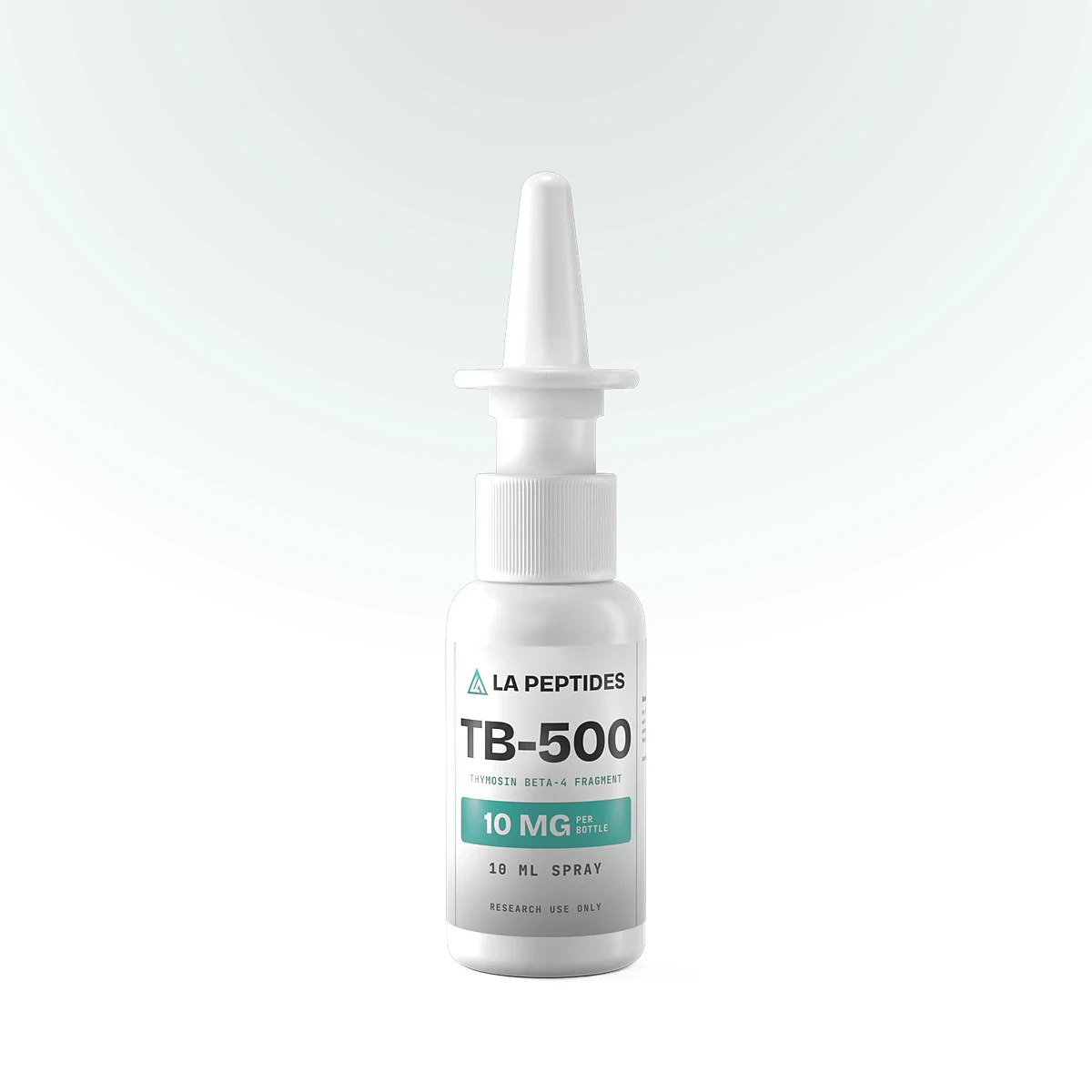
TB500 Spray
Made in the USA
TB500, a synthetic thymosin beta-4–derived peptide, in a buffered aqueous solution.
TB500, a synthetic thymosin beta-4–derived peptide, in a buffered aqueous solution. Supplied in a spray bottle. For laboratory research use only. Not for human or veterinary use.
Contents: 10 mg TB500 per 10 mL bottle.
In stock
Order by 2 PM PT for same-day dispatchMonday to Friday, except holidays. Tracking is emailed when it ships.
- Free shipping + BAC waterA free 10 mL vial of BAC water on orders of $200 or more
Research use only. Not for human or veterinary use, and not intended to diagnose, treat, cure or prevent any disease.
Research profile
TB-500 research profile
TB-500 is the name most commonly used for the synthetic N-acetylated fragment Ac-LKKTETQ, residues 17–23 of thymosin beta-4 (Tβ4). This short stretch contains the LKKTET actin-binding motif. Some sources use "TB-500" for full-length Tβ4, so identity should be confirmed by mass spectrometry.
Specifications
- Sequence
- Ac-Leu-Lys-Lys-Thr-Glu-Thr-Gln-OH (Ac-LKKTETQ), Tβ4 residues 17–23
- Molecular formula
- C38H68N10O14
- Molecular weight
- ≈ 889.0 g/mol
- CAS number
- 885340-08-9
- Parent protein
- Thymosin beta-4, 43 residues, ≈ 4963.5 g/mol, CAS 77591-33-4
- Form
- Supplied in spray format
- Storage
- Keep sealed, protected from light and moisture; follow the label
Published research
- Actin biology: Tβ4 identified as the main actin-sequestering protein in cells (Safer et al., J Biol Chem, 1991).
- Wound models: topical TB-500 in mouse skin wounds (Huang et al., Proteomics, 2006); Tβ4 in rat skin wounds (Malinda et al., J Invest Dermatol, 1999).
- Cardiac models: Tβ4 in mouse coronary ligation and cultured cardiomyocytes (Bock-Marquette et al., Nature, 2004).
- Analytical chemistry: characterization and detection of the fragment and its metabolites (Esposito et al., Drug Test Anal, 2012).
Frequently asked questions
Is TB-500 the same as thymosin beta-4?
Not exactly. TB-500 most commonly refers to the 7-residue fragment Ac-LKKTETQ (≈ 889 g/mol) from thymosin beta-4, a 43-residue protein (≈ 4963 g/mol).
What is the LKKTET motif?
It is the actin-binding region of thymosin beta-4, contained within the TB-500 fragment.
For laboratory research use only. Not for human or veterinary use. Not intended to diagnose, treat, cure or prevent any disease. Literature references are provided for scientific context and do not describe this product's suitability for any use.
Related compounds
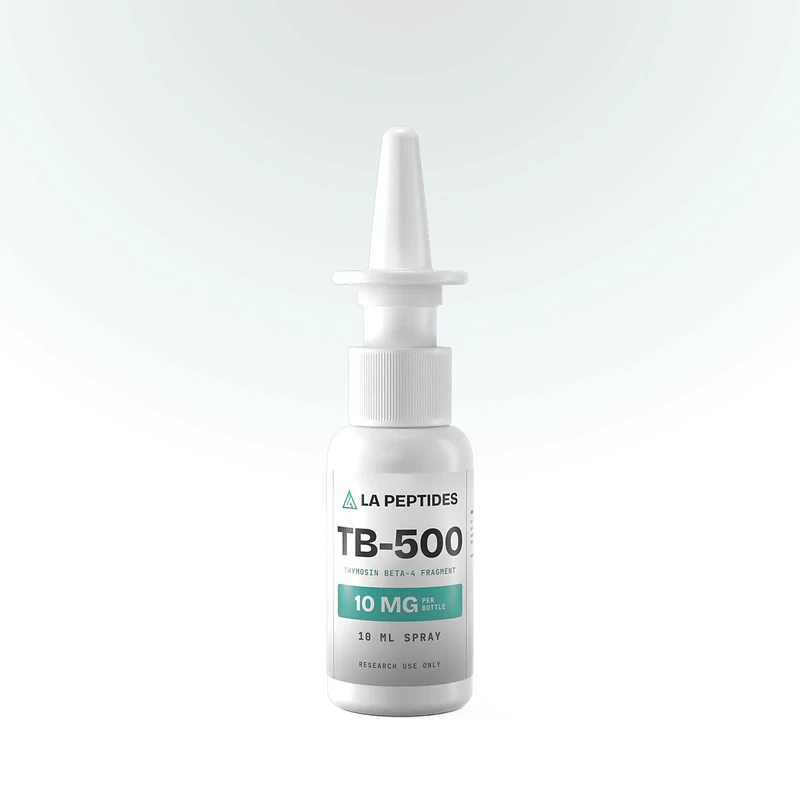 TB500 Spray$59.99
BPC-157 vs TB-500: two research peptides compared · Reading a mass spectrum on a peptide COA: m/z, charge states and adducts · GHK-Cu blends explained: GLOW and KLOW compositions · CJC-1295 with and without DAC: what the names mean · Short peptide bioregulators: an overview for researchers · Why a peptide's molecular weight can differ: salts, caps and oxidation · Thymosin alpha-1: structure, history and research · Epitalon (AEDG): what the research covers · KPV: the α-MSH tripeptide explained · MOTS-c: the mitochondrial-derived peptide explained · Adamax and Semax: what is known about this analog · Selank: the tuftsin-derived heptapeptide explained · SNAP-8 vs Argireline: two SNAP-25 mimic peptides compared · AHK-Cu vs GHK-Cu: comparing two copper tripeptides · GHK-Cu: structure, history and published research · HPLC purity: what the percentage on a COA means · Mass spectrometry: how a peptide's identity is confirmed · How to match your vial to a published COA · Lyophilized peptides: what they are and how labs store them · How to choose a research compound supplier: 7 points