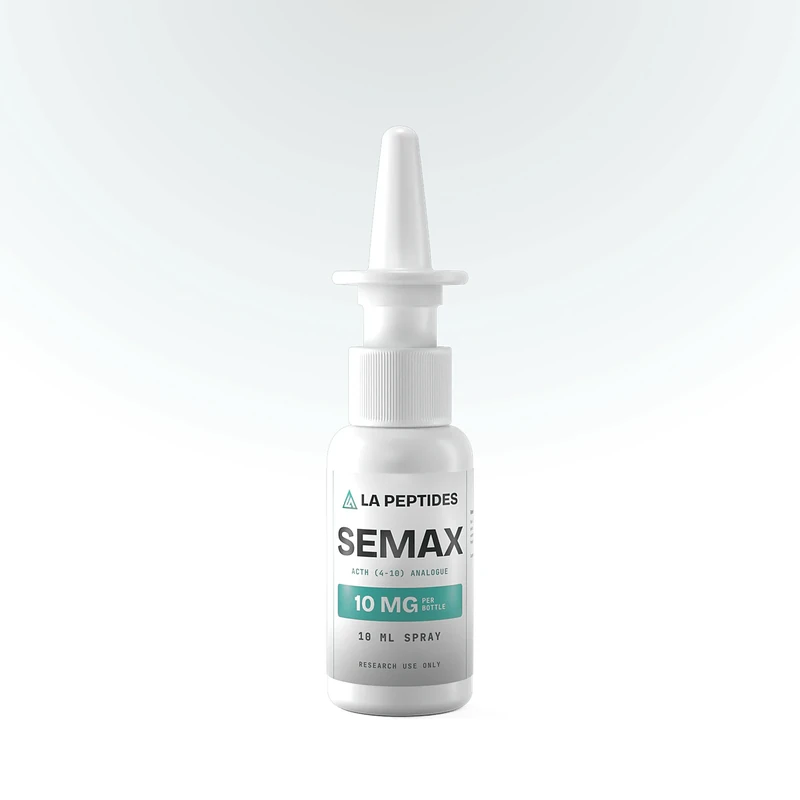
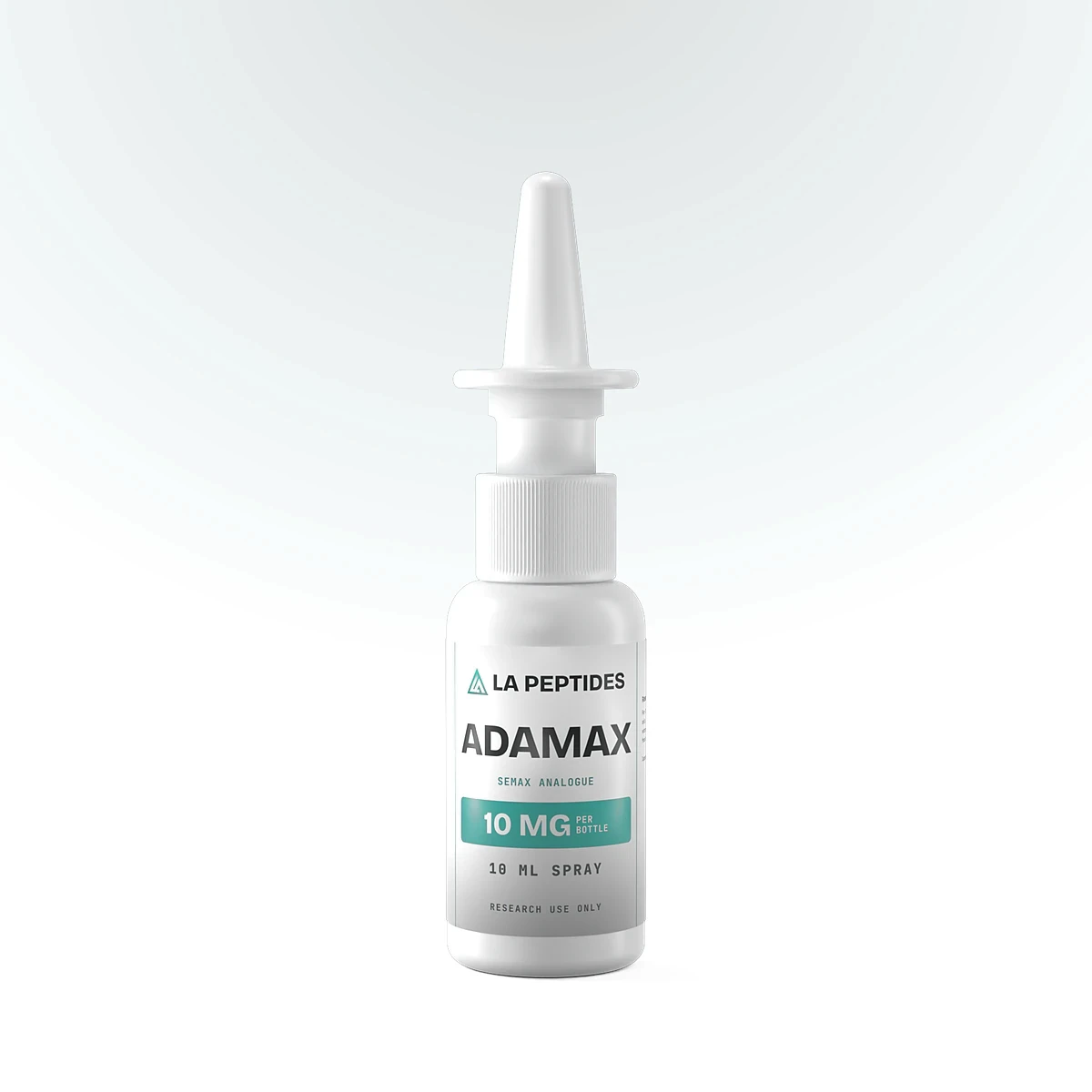
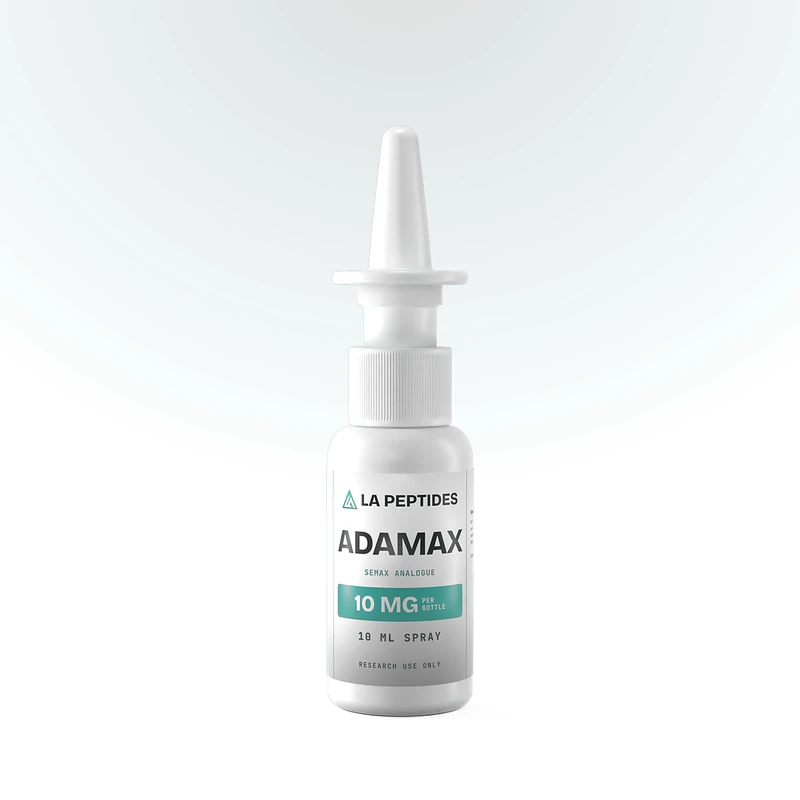
Adamax, a synthetic research peptide, in a buffered aqueous solution. Supplied in a spray bottle. For laboratory research use only. Not for human or veterinary use.
In stock
Order by 2 PM PT for same-day dispatchMonday to Friday, except holidays. Tracking is emailed when it ships.
Free shipping + BAC waterA free 10 mL vial of BAC water on orders of $200 or more
Research use only. Not for human or veterinary use, and not intended to diagnose, treat, cure or prevent any disease.
Research profile
Adamax research profile
Adamax is a synthetic analog in the Semax peptide family. Semax (Met-Glu-His-Phe-Pro-Gly-Pro) is a heptapeptide built from the ACTH(4–7) fragment extended with Pro-Gly-Pro. Adamax is described in public chemical databases as that heptapeptide core with terminal modifications, including an adamantane-based C-terminal group. Peer-reviewed literature on Adamax itself is limited.
Specifications
Peptide family
Semax analog (ACTH(4–7)-Pro-Gly-Pro core)
Modification
Terminal modifications incl. adamantane-based C-terminal group (as reported)
Molecular formula
C50H69N11O11S (as reported)
Molecular weight
≈ 1032.2 g/mol (as reported)
Sizes
10 mg and 40 mg
Form
Solution in a sealed spray vial
Storage
Keep sealed and protected from light; follow the label
Published research
Parent peptide: Semax was developed at the Institute of Molecular Genetics of the Russian Academy of Sciences and has an extensive rodent and in vitro literature.
Adamantane chemistry: adamantane groups are used in medicinal chemistry research to increase lipophilicity and metabolic stability of small molecules and peptides.
Literature status: there is little peer-reviewed data specific to Adamax.
A synthetic Semax-family peptide analog with terminal modifications, including an adamantane-based group. It is sold for laboratory research use only.
What sizes are available?
10 mg and 40 mg.
Is there published research on Adamax?
Very little. Most published work concerns the parent peptide, Semax. Our guide explains what is and is not known.
For laboratory research use only. Not for human or veterinary use. Not intended to diagnose, treat, cure or prevent any disease. Literature references are provided for scientific context and do not describe this product's suitability for any use.
Save with a bundle
Adamax Spray is part of this research bundle. See all bundles