Frequently asked questions
Sourcing, testing, storage, ordering and payment.
Where are your products made?
Our products are manufactured in the USA. We don’t import finished product and relabel it.
Do your products come with a certificate of analysis (COA)?
Most do: 51 of our products have published COAs from Bioviridian and Freedom Diagnostics, 149 in all, on each product page and in the COA Portal. On tested compounds, the QR on the label opens the latest COA.
Who can purchase from LA Peptides?
Our products are sold for laboratory research use only. By ordering, you confirm you are 21 or older and will use products for research purposes only.
Are these products for human use?
No. All products are for research use only and are not intended for human or veterinary use, or to diagnose, treat, cure or prevent any disease.
How should lyophilized peptides be stored?
Store lyophilized vials cold and away from light. Once reconstituted, keep them refrigerated and follow your lab’s handling protocols.
What do I need to reconstitute a peptide?
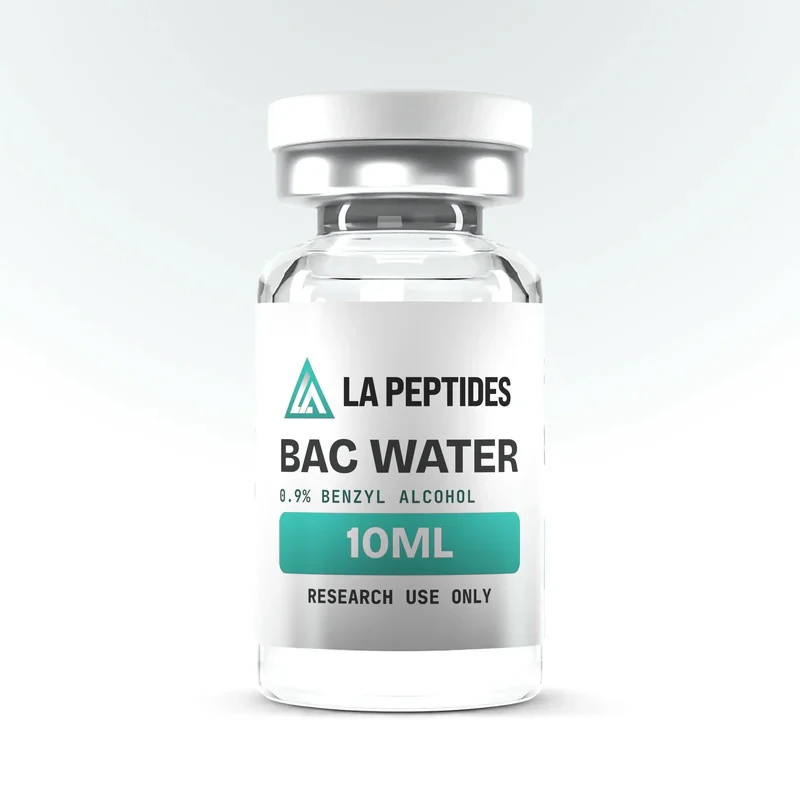
Lyophilized peptides are reconstituted with a suitable diluent. BAC water and acetic acid are in Lab Supplies, and orders of $200.00 or more get a free 10 mL vial of BAC water.
How can I pay?
You’ll see the available payment methods at checkout. For app and crypto payments, you receive the payment details with your order number right after checkout, and your order ships once payment arrives.
BPC-157 vs TB-500: two research peptides compared · Reading a mass spectrum on a peptide COA: m/z, charge states and adducts · GHK-Cu blends explained: GLOW and KLOW compositions · CJC-1295 with and without DAC: what the names mean · Short peptide bioregulators: an overview for researchers · Why a peptide's molecular weight can differ: salts, caps and oxidation · Thymosin alpha-1: structure, history and research · Epitalon (AEDG): what the research covers · KPV: the α-MSH tripeptide explained · MOTS-c: the mitochondrial-derived peptide explained · Adamax and Semax: what is known about this analog · Selank: the tuftsin-derived heptapeptide explained · SNAP-8 vs Argireline: two SNAP-25 mimic peptides compared · AHK-Cu vs GHK-Cu: comparing two copper tripeptides · GHK-Cu: structure, history and published research · HPLC purity: what the percentage on a COA means · Mass spectrometry: how a peptide's identity is confirmed · How to match your vial to a published COA · Lyophilized peptides: what they are and how labs store them · How to choose a research compound supplier: 7 points