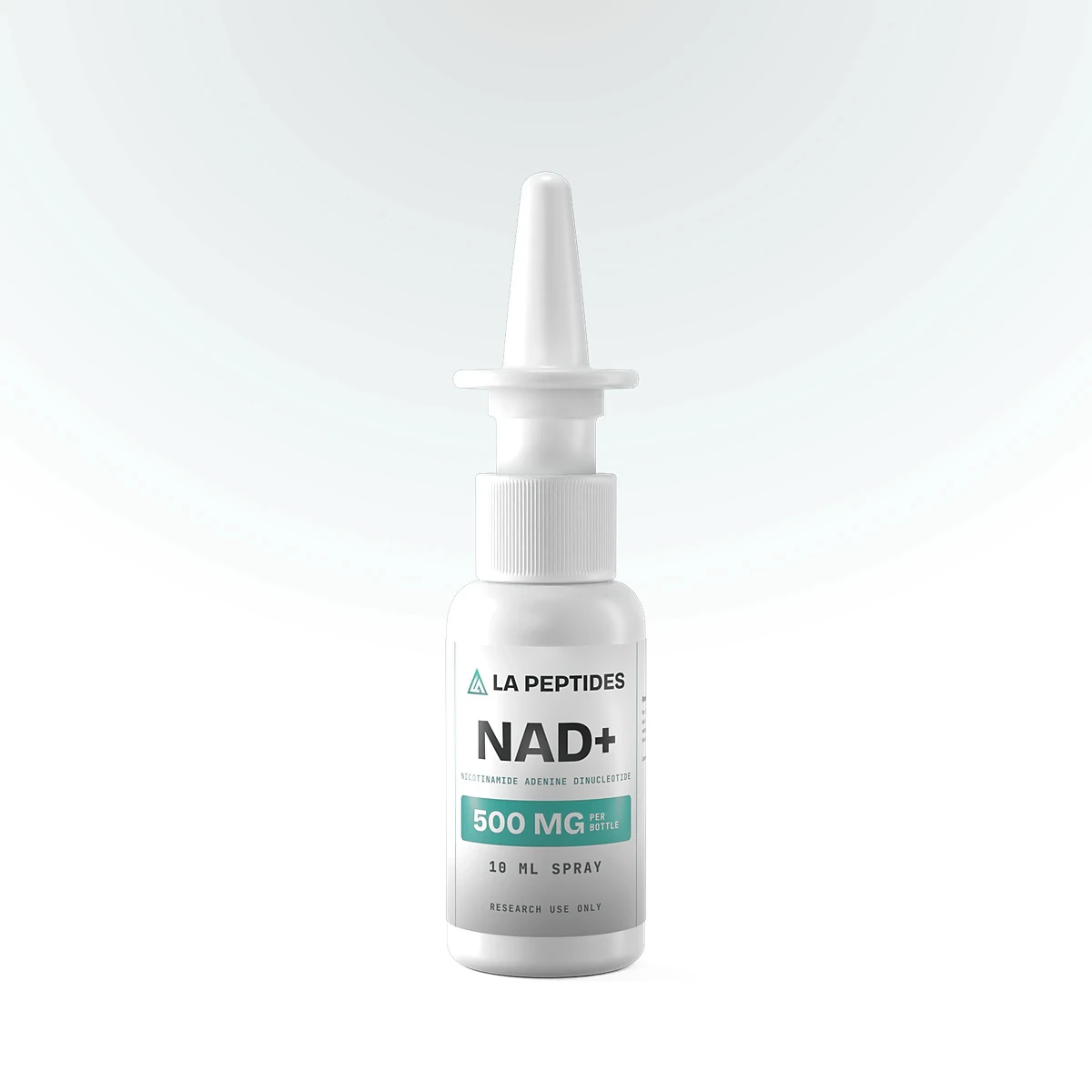
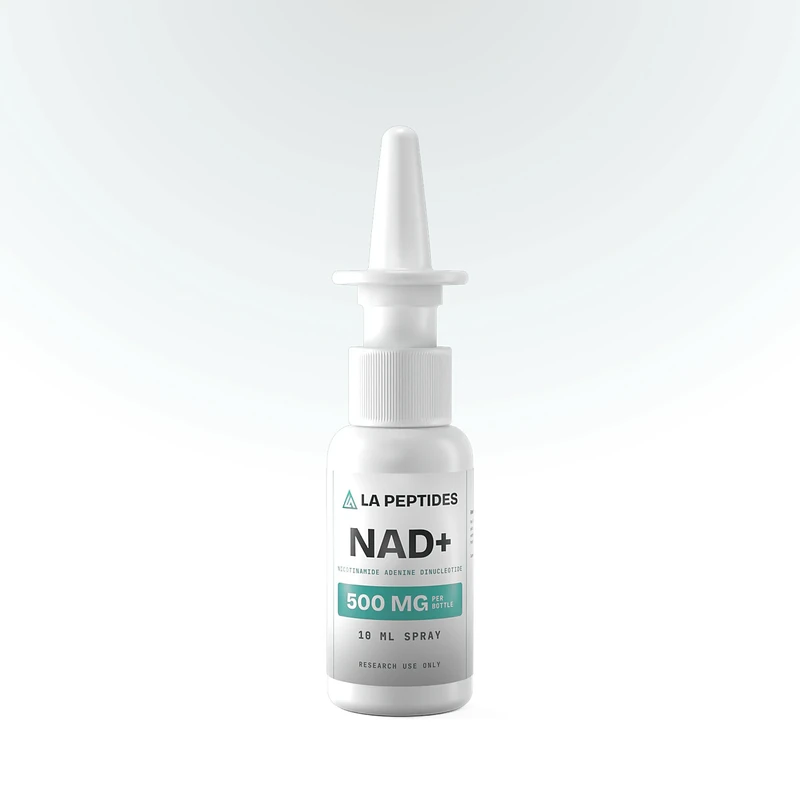
NAD+ (nicotinamide adenine dinucleotide) in a buffered aqueous solution. Supplied in a spray bottle. For laboratory research use only. Not for human or veterinary use.
Contents: 500 mg NAD+ per 10 mL bottle.
In stock
Order by 2 PM PT for same-day dispatchMonday to Friday, except holidays. Tracking is emailed when it ships.
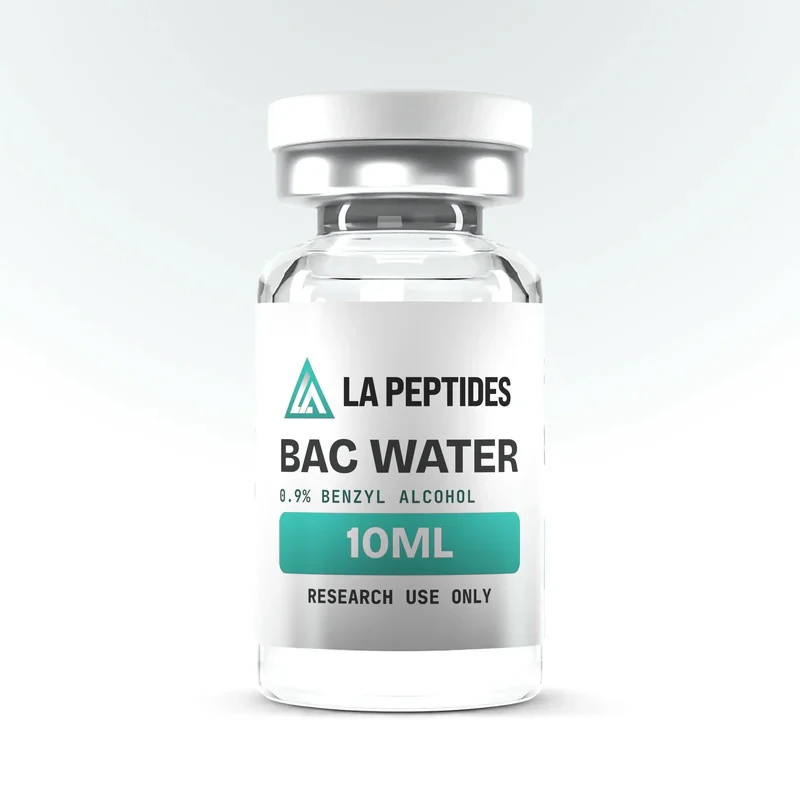
Free shipping + BAC waterA free 10 mL vial of BAC water on orders of $200 or more
Research use only. Not for human or veterinary use, and not intended to diagnose, treat, cure or prevent any disease.
Research profile
NAD+ research profile
NAD+ (β-nicotinamide adenine dinucleotide, oxidized form) is a dinucleotide coenzyme in which nicotinamide riboside and adenosine are joined through a pyrophosphate bridge. Harden and Young first described it in yeast in 1906. It is a substrate for sirtuins and PARPs as well as a redox carrier.
Specifications
Structure
Nicotinamide riboside and adenosine linked by pyrophosphate
Molecular formula
C21H27N7O14P2 (free acid)
Molecular weight
≈ 663.4 g/mol (free acid)
CAS number
53-84-9
Contents
500 mg NAD+ per 10 mL bottle
Form
Supplied in spray format
Storage
Keep sealed, protected from light and moisture; follow the label
Published research
Sirtuin biology: NAD+ as the required substrate of Sir2 proteins in yeast and mouse (Imai et al., Nature, 2000).
Age-related decline: nuclear–mitochondrial signalling in young vs old mice (Gomes et al., Cell, 2013).
CD38 as a driver of NAD+ decline with age in mice (Camacho-Pereira et al., Cell Metab, 2016).
Precursor studies: NMN in mouse models of diet- and age-induced diabetes (Yoshino et al., Cell Metab, 2011).
Frequently asked questions
What is the difference between NAD+ and NADH?
NAD+ is the oxidized form; NADH is the reduced form carrying a hydride.
Why do salt forms matter?
The CAS number and molecular weight above are for the free acid; salts and hydrates differ.
For laboratory research use only. Not for human or veterinary use. Not intended to diagnose, treat, cure or prevent any disease. Literature references are provided for scientific context and do not describe this product's suitability for any use.