$1.20/mgCOA 99.84%
Single Peptides
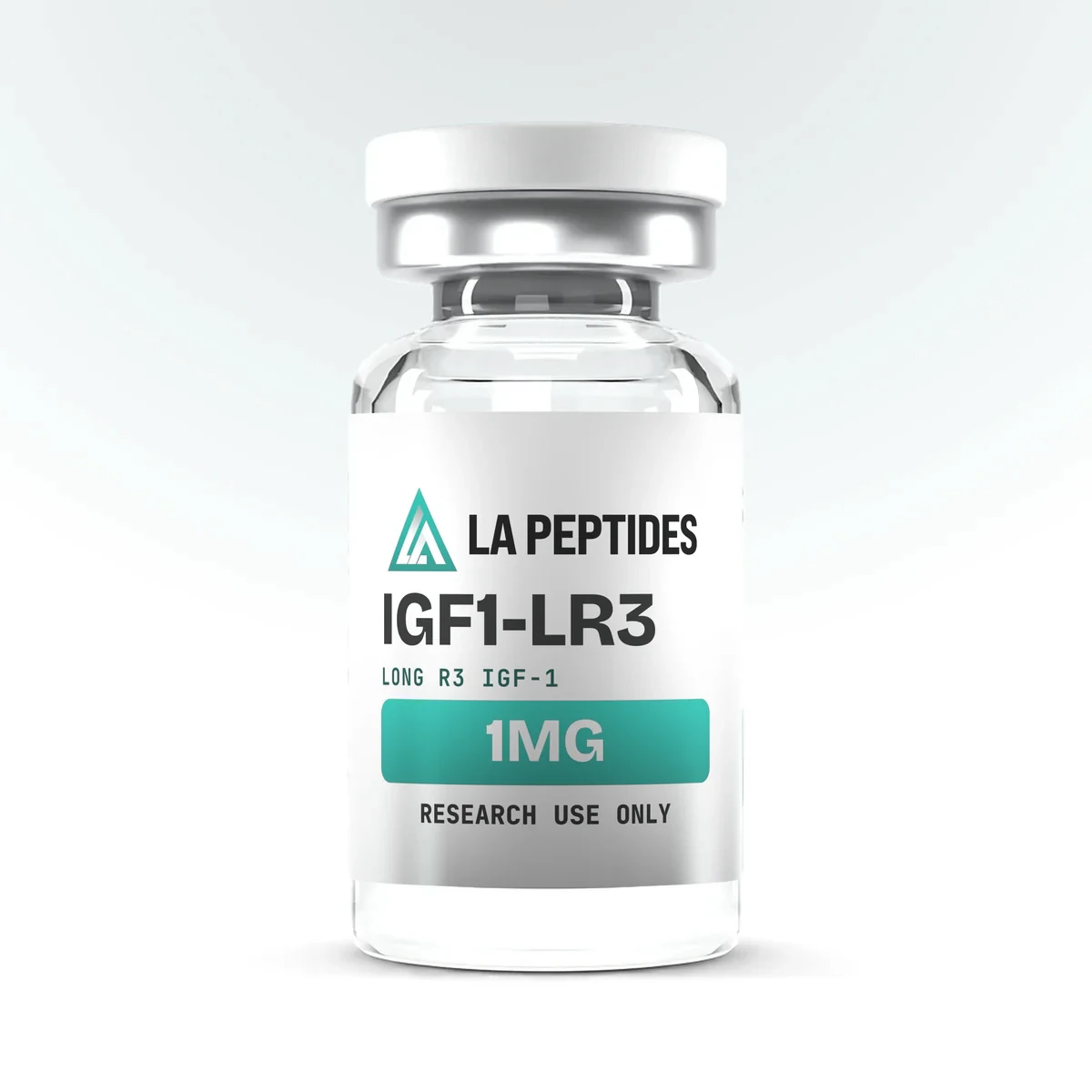
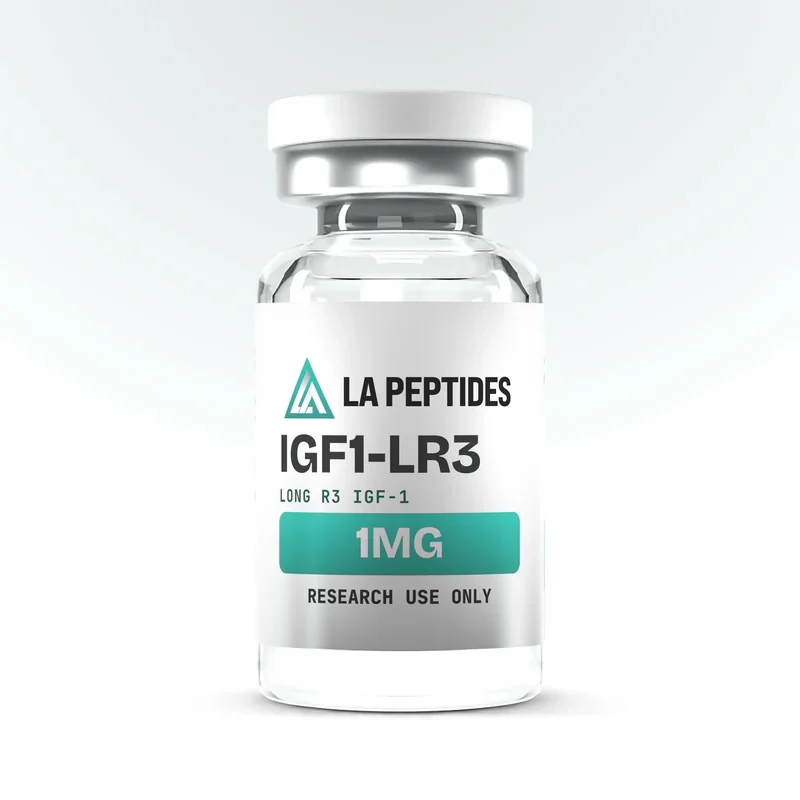
IGF1-LR3
Made in the USA2 COAs
IGF1-LR3 is an 83-amino-acid recombinant analogue of IGF-1 with an N-terminal extension and an Arg3 substitution.
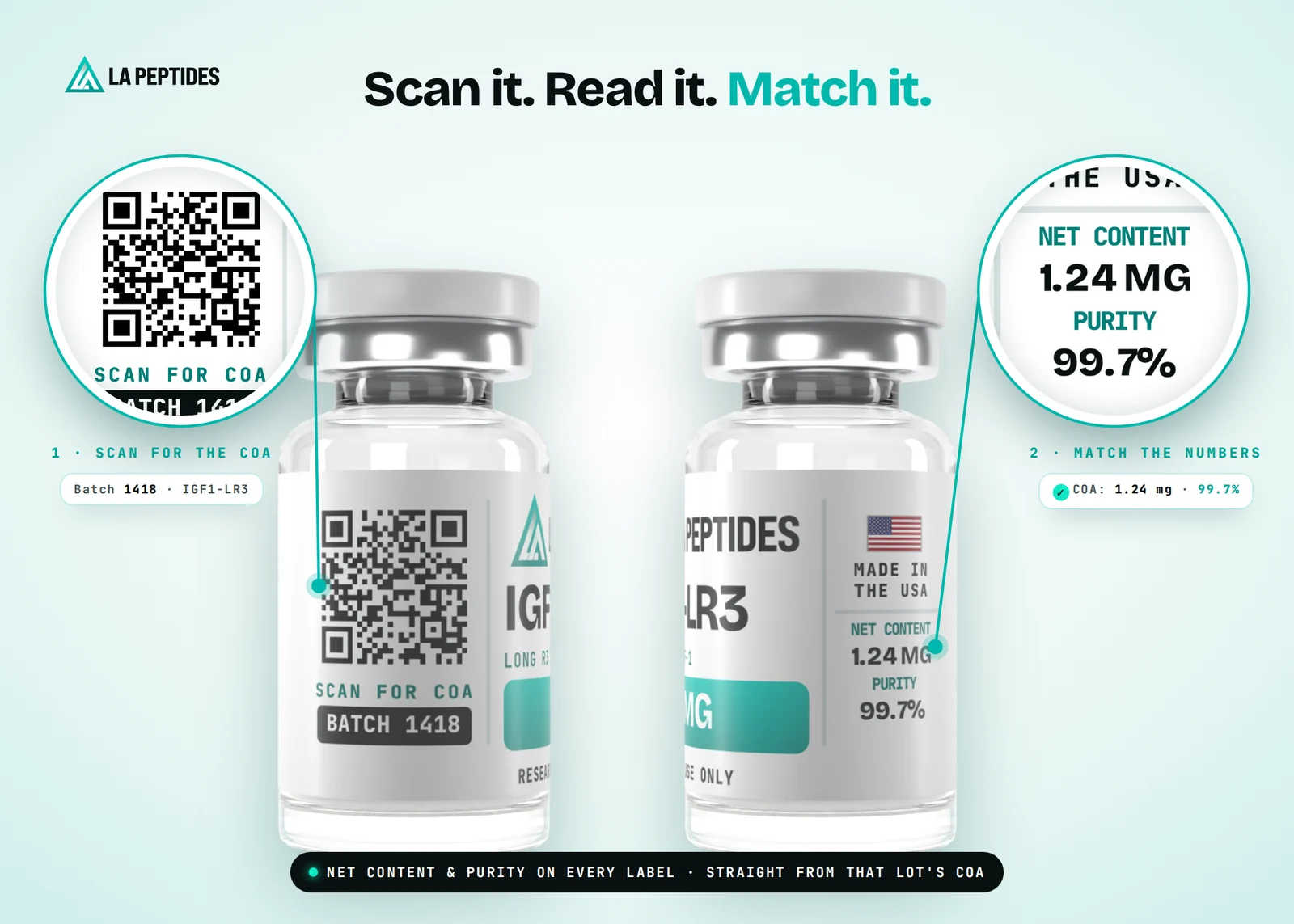
IGF1-LR3 is an 83-amino-acid recombinant analogue of IGF-1 with an N-terminal extension and an Arg3 substitution. Supplied as a lyophilized powder in sealed vials. The QR code on the label opens the latest third-party certificate of analysis (COA) for this compound. For laboratory research use only. Not for human or veterinary use.
In stock
Order by 2 PM PT for same-day dispatchMonday to Friday, except holidays. Tracking is emailed when it ships.
- Free shipping + BAC waterA free 10 mL vial of BAC water on orders of $200 or more
- QR on the back labelScan it to open the latest COA for this compound
Research use only. Not for human or veterinary use, and not intended to diagnose, treat, cure or prevent any disease.
Lab results for IGF1-LR3
Each COA is issued by a third-party lab.
BioviridianHPLC purity, mass-spec identity
Third-party COA99.7%
HPLC purity on the latest COA
Batch1418
Size tested1 mg
COA issuedJul 29, 2026
Verification codeCOA6566
All 2 COAs for IGF1-LR3
Research profile
IGF-1 LR3 research profile
IGF-1 LR3 (Long R3 IGF-I) is an 83-residue analog of human insulin-like growth factor I. It carries a 13-residue N-terminal extension and an arginine in place of glutamic acid at position 3 of the IGF-I sequence (Glu3→Arg). These changes sharply reduce binding to IGF-binding proteins while keeping IGF-1 receptor activity. It was described by Francis and colleagues in Adelaide in 1992 and is widely used in serum-free mammalian cell-culture media, including large-scale bioprocess culture.
Specifications
- Sequence
- MFPAMPLSSLFVN-GPRTLCGAELVDALQFVCGDRGFYFNKPTGYGSSSRRAPQTGIVDECCFRSCDLRRLEMYCAPLKPAKSA (83 residues; 13-residue extension + [Arg3]IGF-I)
- Molecular formula
- C400H619N111O115S9 (three disulfide bonds)
- Molecular weight
- ≈ 9111 g/mol
- CAS number
- 143045-27-6
- Size
- 1MG per vial
- Form
- Lyophilized powder, sealed vial
- Storage
- Keep sealed, protected from light and moisture; follow the label
- Testing
- Third-party COAs on tested batches (HPLC purity, mass spectrometry identity). The QR code on the label opens the latest one for this compound.
Published research
- Design and characterization: IGF-binding protein and receptor binding of recombinant IGF-I fusion analogs, including Long R3 IGF-I (Francis et al., J Mol Endocrinol, 1992).
- Cell culture: used as an insulin/IGF-I replacement in serum-free media for mammalian cell lines such as CHO cells in recombinant protein production.
- Rodent models: nitrogen balance and growth measures in dexamethasone-treated rats (Tomas et al., Biochem J, 1992).
- Guinea pig model: organ weights and plasma IGF and IGF-binding protein levels (Conlon et al., J Endocrinol, 1995).
Frequently asked questions
What does "LR3" stand for?
Long (the 13-residue N-terminal extension) and R3 (arginine at position 3 of the IGF-I sequence in place of glutamic acid).
Why does reduced IGF-binding protein affinity matter in culture?
IGF-binding proteins secreted by cells can sequester native IGF-I. Long R3 IGF-I binds them poorly, so more of it remains available to the IGF-1 receptor in culture media.
Where do I find the certificate of analysis?
The QR code on the label opens the latest third-party certificate of analysis (COA) for this compound. You can also search the COA Portal by compound or batch number.
For laboratory research use only. Not for human or veterinary use. Not intended to diagnose, treat, cure or prevent any disease. Literature references are provided for scientific context and do not describe this product's suitability for any use.
Related compounds
 IGF1-LR31 mg · $59.99
BPC-157 vs TB-500: two research peptides compared · Reading a mass spectrum on a peptide COA: m/z, charge states and adducts · GHK-Cu blends explained: GLOW and KLOW compositions · CJC-1295 with and without DAC: what the names mean · Short peptide bioregulators: an overview for researchers · Why a peptide's molecular weight can differ: salts, caps and oxidation · Thymosin alpha-1: structure, history and research · Epitalon (AEDG): what the research covers · KPV: the α-MSH tripeptide explained · MOTS-c: the mitochondrial-derived peptide explained · Adamax and Semax: what is known about this analog · Selank: the tuftsin-derived heptapeptide explained · SNAP-8 vs Argireline: two SNAP-25 mimic peptides compared · AHK-Cu vs GHK-Cu: comparing two copper tripeptides · GHK-Cu: structure, history and published research · HPLC purity: what the percentage on a COA means · Mass spectrometry: how a peptide's identity is confirmed · How to match your vial to a published COA · Lyophilized peptides: what they are and how labs store them · How to choose a research compound supplier: 7 points