100% manufactured in the USABatch-specific COAs on tested lots75 research compounds in stockFor research use onlyFree shipping on orders over $200100% manufactured in the USABatch-specific COAs on tested lots75 research compounds in stockFor research use onlyFree shipping on orders over $200100% manufactured in the USABatch-specific COAs on tested lots75 research compounds in stockFor research use onlyFree shipping on orders over $200100% manufactured in the USABatch-specific COAs on tested lots75 research compounds in stockFor research use onlyFree shipping on orders over $200
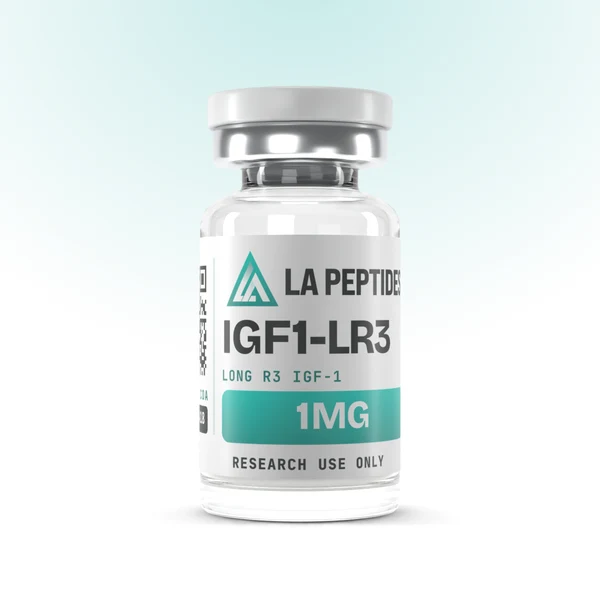
IGF1-LR3 is an 83-amino-acid recombinant analogue of IGF-1 with an N-terminal extension and an Arg3 substitution. Supplied as a lyophilized powder in sealed vials. Each batch has its own certificate of analysis (COA), which opens when you scan the QR code on the label. For laboratory research use only. Not for human or veterinary use.
Research use only. Not for human or veterinary use. Not intended to diagnose, treat, cure or prevent any disease.
Research profile
IGF-1 LR3 research profile
IGF-1 LR3 (Long R3 IGF-I) is an 83-residue analog of human insulin-like growth factor I. It carries a 13-residue N-terminal extension and an arginine in place of glutamic acid at position 3 of the IGF-I sequence (Glu3→Arg). These changes sharply reduce binding to IGF-binding proteins while keeping IGF-1 receptor activity. It was described by Francis and colleagues in Adelaide in 1992 and is widely used in serum-free mammalian cell-culture media, including large-scale bioprocess culture.
Keep sealed, protected from light and moisture; follow the label
Testing
HPLC purity and mass spectrometry identity, per lot. Scan the QR code on the vial for the certificate of analysis.
Published research
Design and characterization: IGF-binding protein and receptor binding of recombinant IGF-I fusion analogs, including Long R3 IGF-I (Francis et al., J Mol Endocrinol, 1992).
Cell culture: used as an insulin/IGF-I replacement in serum-free media for mammalian cell lines such as CHO cells in recombinant protein production.
Rodent models: nitrogen balance and growth measures in dexamethasone-treated rats (Tomas et al., Biochem J, 1992).
Guinea pig model: organ weights and plasma IGF and IGF-binding protein levels (Conlon et al., J Endocrinol, 1995).
Frequently asked questions
What does "LR3" stand for?
Long (the 13-residue N-terminal extension) and R3 (arginine at position 3 of the IGF-I sequence in place of glutamic acid).
Why does reduced IGF-binding protein affinity matter in culture?
IGF-binding proteins secreted by cells can sequester native IGF-I. Long R3 IGF-I binds them poorly, so more of it remains available to the IGF-1 receptor in culture media.
How do I verify my lot?
Scan the QR code on the vial. It opens the certificate of analysis for that lot, with HPLC purity and the mass spectrometry identity result.
For laboratory research use only. Not for human or veterinary use. Not intended to diagnose, treat, cure or prevent any disease. Literature references are provided for scientific context and do not describe this product's suitability for any use.
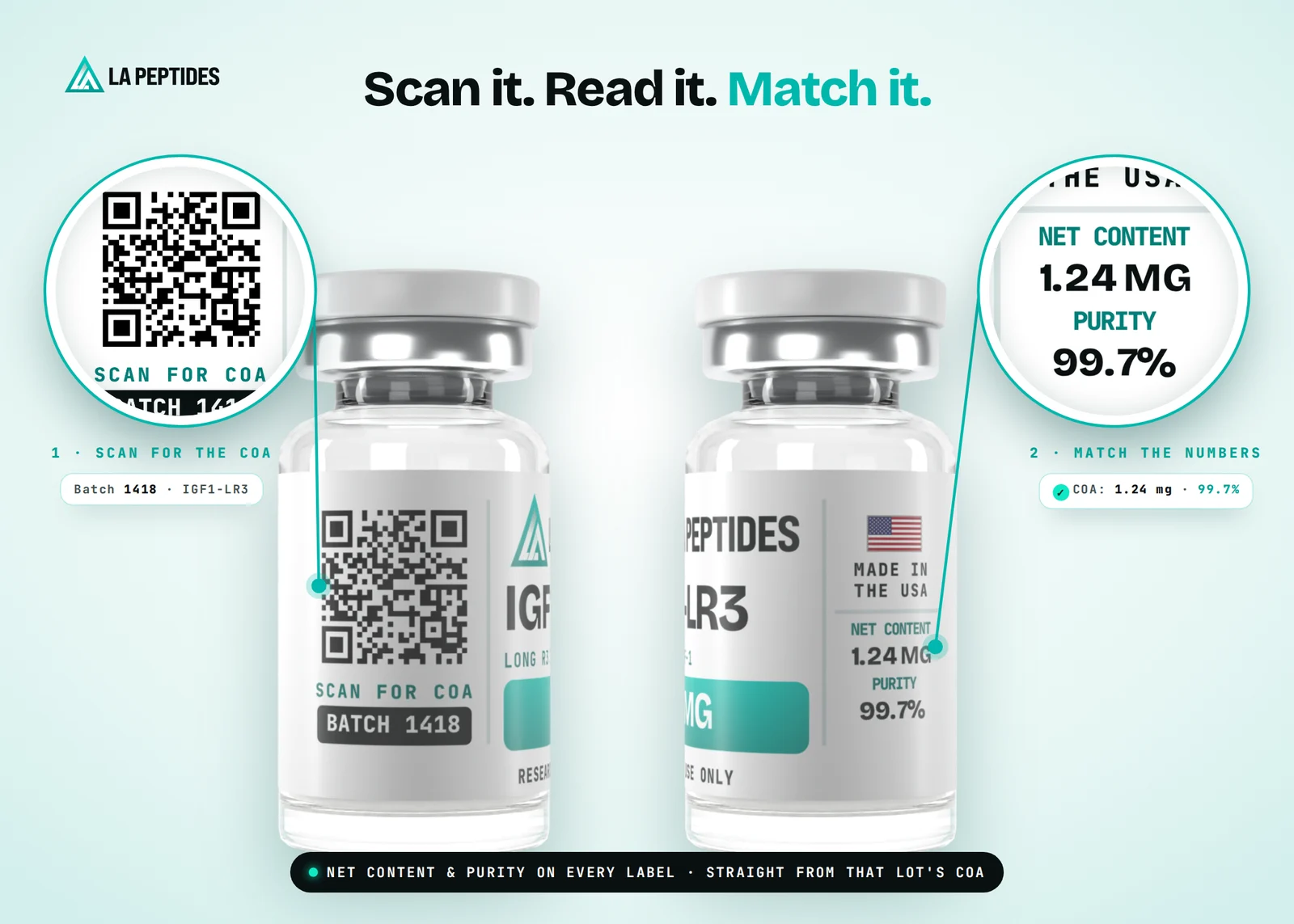
Every LA Peptides vial carries the net content and HPLC purity measured for its batch, printed right on the label. The same numbers appear on that batch's third-party certificate of analysis.
1
ScanThe QR code on the label opens the COA for this exact batch.
2
ReadNet content (mg) and HPLC purity (%) are printed on the label's side panel.
3
MatchThe batch number, net content and purity on the label should match the COA line for line.
Current batch · label = COA
1MGBatch 14181.24 mg99.7%
View the COA
For laboratory research use only. Not for human or veterinary use.