COA 99.9%
Blends
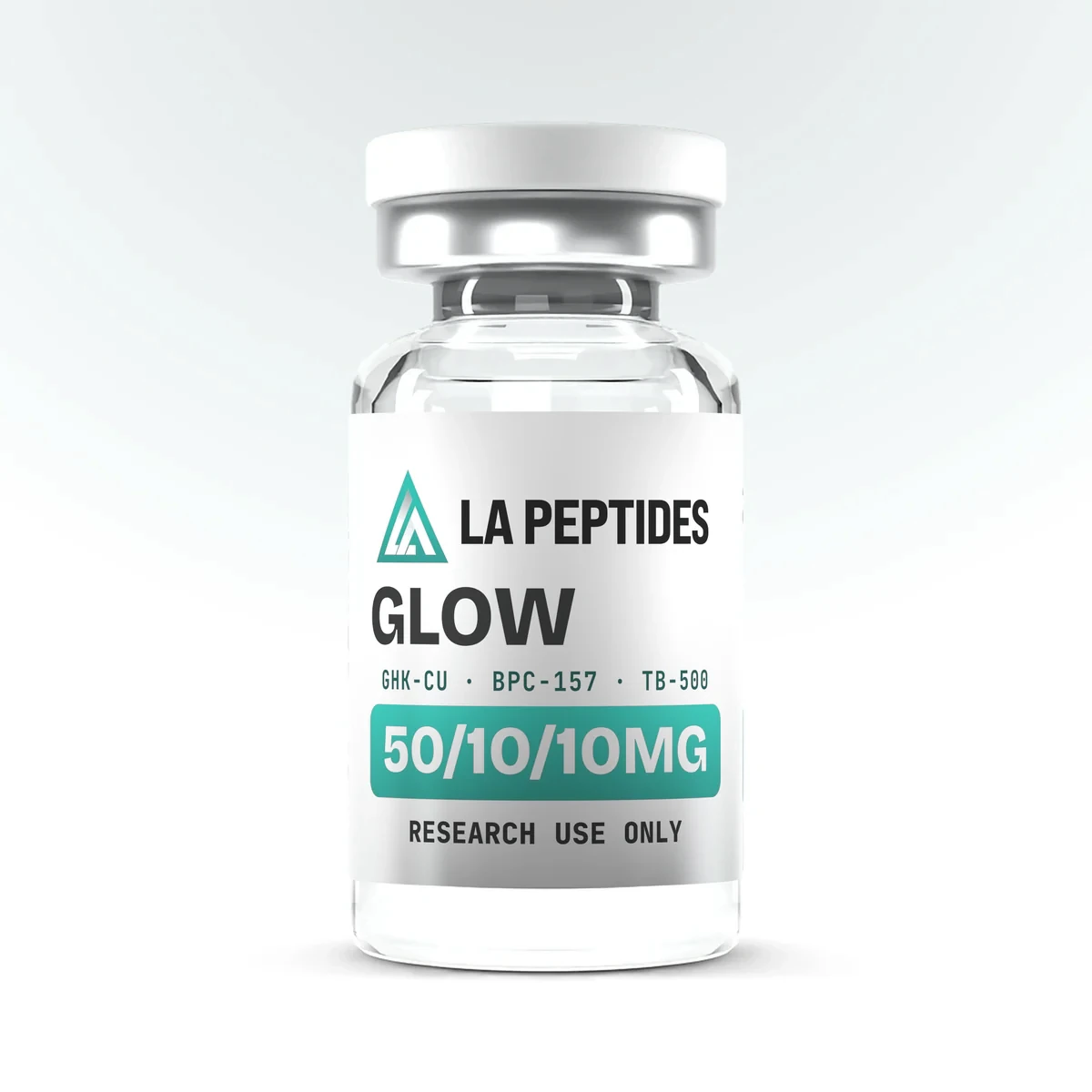
GLOW
Made in the USA3 COAs
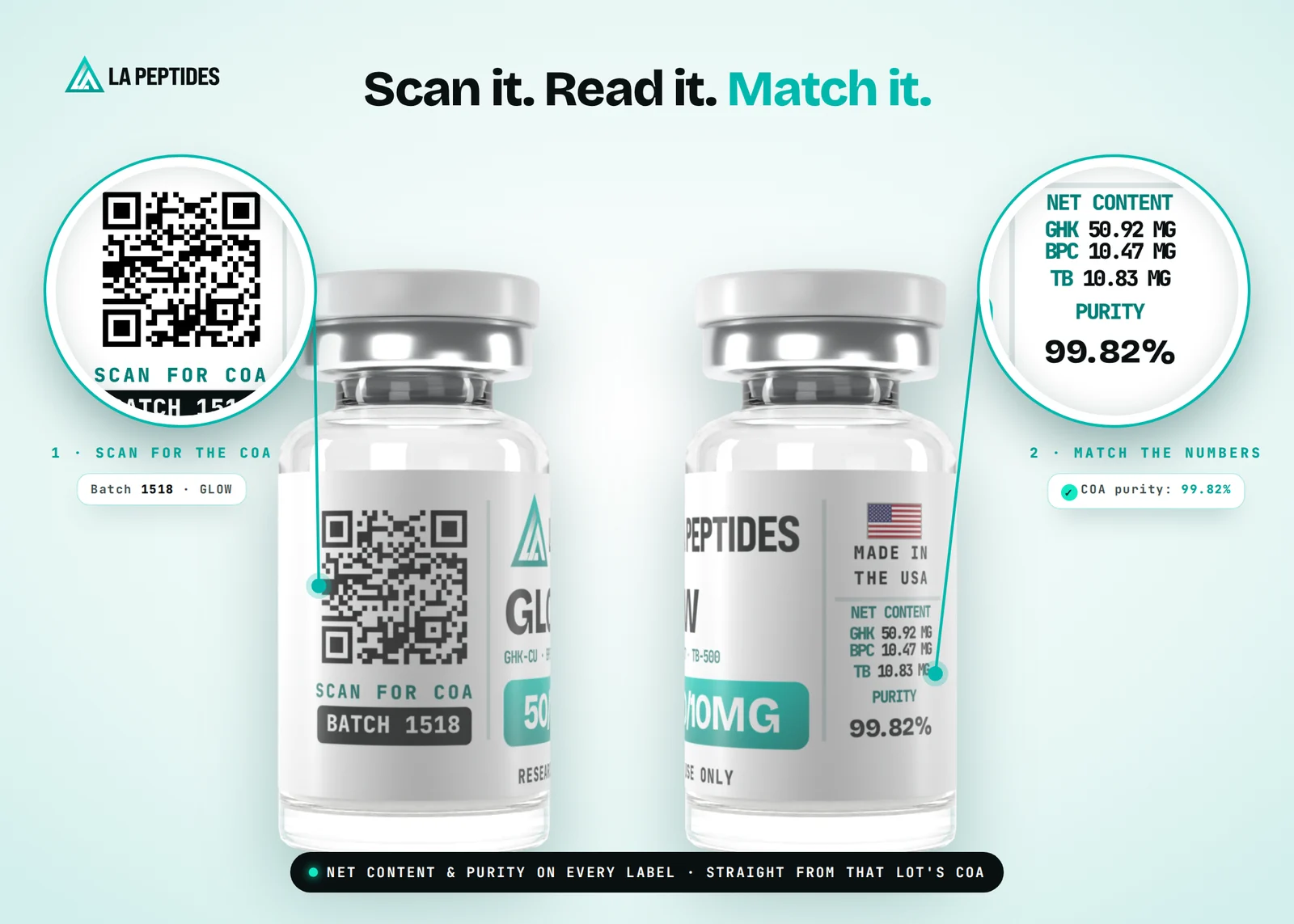
GLOW is a three-peptide research blend: GHK-Cu (50 mg), BPC-157 (10 mg) and TB-500 (10 mg).
GLOW is a three-peptide research blend: GHK-Cu (50 mg), BPC-157 (10 mg) and TB-500 (10 mg). Supplied as a lyophilized powder in sealed vials. The QR code on the label opens the latest third-party certificate of analysis (COA) for this compound. For laboratory research use only. Not for human or veterinary use.
In stock
Order by 2 PM PT for same-day dispatchMonday to Friday, except holidays. Tracking is emailed when it ships.
- Free shipping + BAC waterA free 10 mL vial of BAC water on orders of $200 or more
- QR on the back labelScan it to open the latest COA for this compound
Research use only. Not for human or veterinary use, and not intended to diagnose, treat, cure or prevent any disease.
Lab results for GLOW
Each COA is issued by a third-party lab.
BioviridianHPLC purity, mass-spec identity
Third-party COA99.82%
HPLC purity on the latest COA
Batch1518
Size tested70 mg
COA issuedSep 5, 2026
Verification codeCOA8258
All 3 COAs for GLOW
Research profile
GLOW blend research profile
GLOW is a multi-component research material combining three compounds in one vial: the copper peptide GHK-Cu, BPC-157 and the TB-500 fragment of thymosin beta-4. Each component's identity is shown on the certificate of analysis. The literature describes each compound separately; there are no published studies on this blend.
Specifications
- Composition
- GHK-Cu 50 mg + BPC-157 10 mg + TB-500 10 mg per vial (70 mg total)
- GHK-Cu
- Gly-His-Lys copper(II) complex; C14H22CuN6O4, ≈ 401.9 g/mol
- BPC-157
- GEPPPGKPADDAGLV; C62H98N16O22, ≈ 1419.6 g/mol
- TB-500
- Ac-LKKTETQ (thymosin beta-4 residues 17–23); C38H68N10O14, ≈ 889.0 g/mol
- Form
- Lyophilized powder, sealed vial
- Storage
- Keep sealed, protected from light and moisture; follow the label
- Testing
- Third-party COAs on tested batches (HPLC purity, mass spectrometry identity). The QR code on the label opens the latest one for this compound.
Published research
- GHK-Cu: isolated from human plasma (Pickart & Thaler, Nature, 1973); collagen and glycosaminoglycan synthesis by cultured fibroblasts (Maquart et al., 1988; Wegrowski et al., 1992).
- BPC-157: rat tendon and ligament models (Staresinic et al., J Orthop Res, 2003; Cerovecki et al., J Orthop Res, 2010); endothelial cell culture and VEGFR2 expression (Hsieh et al., J Mol Med, 2017).
- TB-500 / thymosin beta-4: actin sequestration (Safer et al., J Biol Chem, 1991); rodent skin wound models (Malinda et al., J Invest Dermatol, 1999; Huang et al., Proteomics, 2006).
Frequently asked questions
What is in GLOW?
GHK-Cu 50 mg, BPC-157 10 mg and TB-500 10 mg per vial, 70 mg in total.
Is there published research on this blend?
No. Published studies examine each component on its own; we are not aware of literature on this combination. The research notes above summarize each component separately.
Where do I find the certificate of analysis?
The QR code on the label opens the latest third-party certificate of analysis (COA) for this compound. You can also search the COA Portal by compound or batch number.
For laboratory research use only. Not for human or veterinary use. Not intended to diagnose, treat, cure or prevent any disease. Literature references are provided for scientific context and do not describe this product's suitability for any use.
Related compounds
COA 99.9%
$1.75/mgCOA 99.76%
$9.50/mgCOA 99.75%5+ vials save 5%
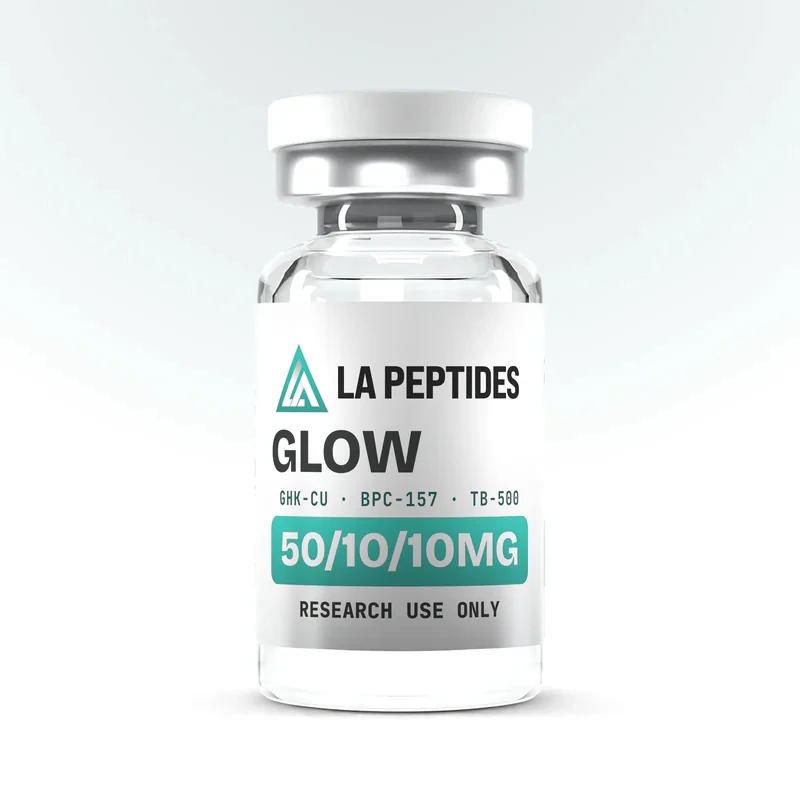 GLOW50/10/10 mg · $99.99
BPC-157 vs TB-500: two research peptides compared · Reading a mass spectrum on a peptide COA: m/z, charge states and adducts · GHK-Cu blends explained: GLOW and KLOW compositions · CJC-1295 with and without DAC: what the names mean · Short peptide bioregulators: an overview for researchers · Why a peptide's molecular weight can differ: salts, caps and oxidation · Thymosin alpha-1: structure, history and research · Epitalon (AEDG): what the research covers · KPV: the α-MSH tripeptide explained · MOTS-c: the mitochondrial-derived peptide explained · Adamax and Semax: what is known about this analog · Selank: the tuftsin-derived heptapeptide explained · SNAP-8 vs Argireline: two SNAP-25 mimic peptides compared · AHK-Cu vs GHK-Cu: comparing two copper tripeptides · GHK-Cu: structure, history and published research · HPLC purity: what the percentage on a COA means · Mass spectrometry: how a peptide's identity is confirmed · How to match your vial to a published COA · Lyophilized peptides: what they are and how labs store them · How to choose a research compound supplier: 7 points