Topicals
GHK-Cu Tincture
Made in the USA
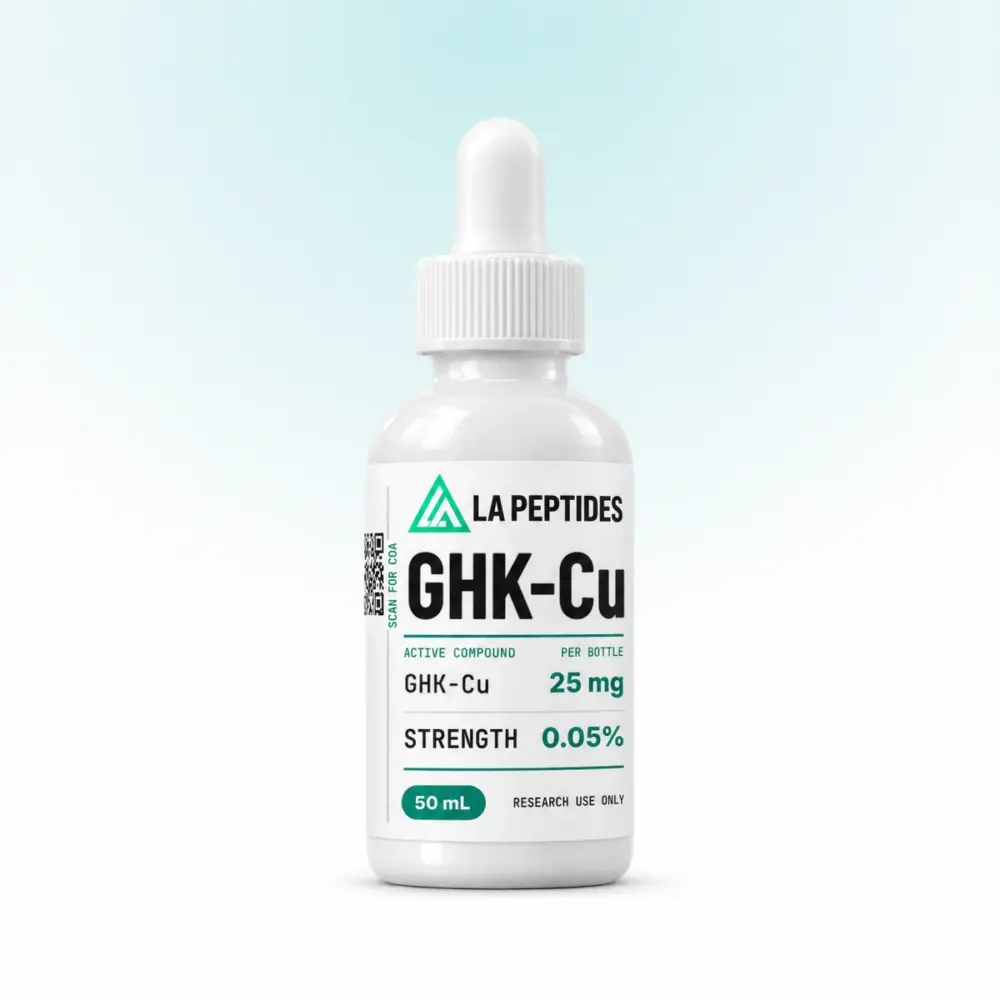
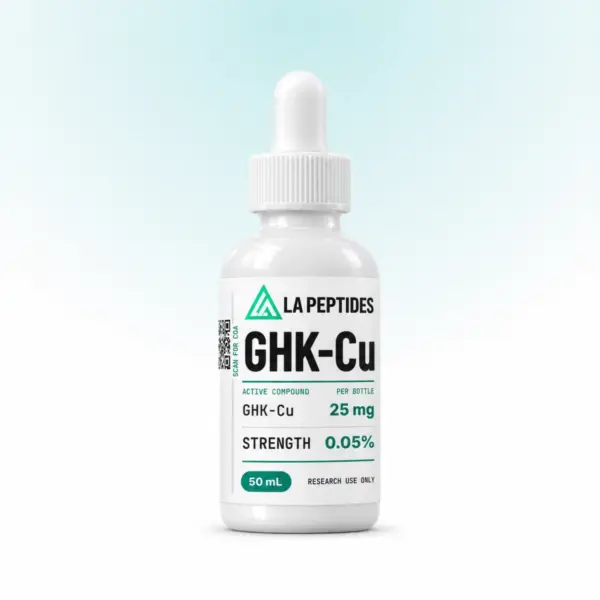
GHK-Cu research solution, 25 mg GHK-Cu per bottle (0.05%).
GHK-Cu research solution, 25 mg GHK-Cu per bottle (0.05%). Supplied in a 50 mL dropper bottle. For laboratory research use only. Not for human or veterinary use.
What is GHK-Cu?
GHK-Cu is the copper(II) complex of the tripeptide glycyl-L-histidyl-L-lysine, first isolated from human plasma in the 1970s. It is one of the most widely studied peptides in skin-biology research, where it has been investigated for its role in copper transport, collagen and extracellular-matrix synthesis and wound-healing models.
What is in the bottle
- Compound: GHK-Cu
- Amount: 25 mg GHK-Cu per bottle
- Strength: 0.05% (0.5 mg/mL)
- Volume: 50 mL
- Format: Liquid in a white dropper bottle
- Documentation: Lot-specific certificate of analysis available in the COA Portal
Storage and handling
Keep the bottle tightly closed and protected from light and heat. Follow the storage guidance on the label and in the certificate of analysis for this lot. Handle with standard laboratory precautions (gloves, eye protection) and keep out of reach of children.
Research use only
This product is sold strictly for laboratory and in-vitro research by qualified professionals. It is not a drug, cosmetic, food or supplement, has not been evaluated or approved by the FDA, and is not intended to diagnose, treat, cure or prevent any condition. Not for human or veterinary use. Nothing on this page is a claim of safety or effectiveness in humans.
In stock
Order by 2 PM PT for same-day dispatchMonday to Friday, except holidays. Tracking is emailed when it ships.
- Free shipping + BAC waterA free 10 mL vial of BAC water on orders of $200 or more
Research use only. Not for human or veterinary use, and not intended to diagnose, treat, cure or prevent any disease.
Related compounds
 GHK-Cu Tincture50 mL · $99.99
BPC-157 vs TB-500: two research peptides compared · Reading a mass spectrum on a peptide COA: m/z, charge states and adducts · GHK-Cu blends explained: GLOW and KLOW compositions · CJC-1295 with and without DAC: what the names mean · Short peptide bioregulators: an overview for researchers · Why a peptide's molecular weight can differ: salts, caps and oxidation · Thymosin alpha-1: structure, history and research · Epitalon (AEDG): what the research covers · KPV: the α-MSH tripeptide explained · MOTS-c: the mitochondrial-derived peptide explained · Adamax and Semax: what is known about this analog · Selank: the tuftsin-derived heptapeptide explained · SNAP-8 vs Argireline: two SNAP-25 mimic peptides compared · AHK-Cu vs GHK-Cu: comparing two copper tripeptides · GHK-Cu: structure, history and published research · HPLC purity: what the percentage on a COA means · Mass spectrometry: how a peptide's identity is confirmed · How to match your vial to a published COA · Lyophilized peptides: what they are and how labs store them · How to choose a research compound supplier: 7 points