Tópicos
Sleep
Hecho en EE. UU.
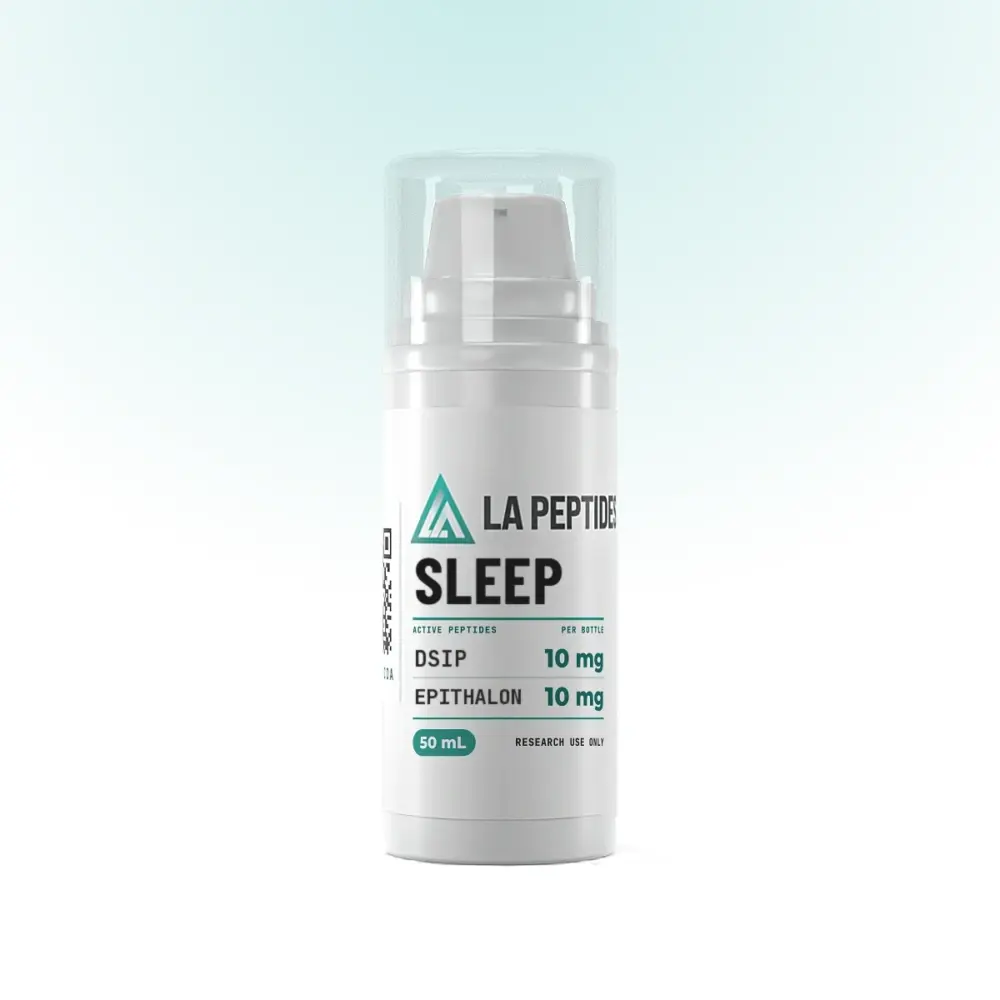
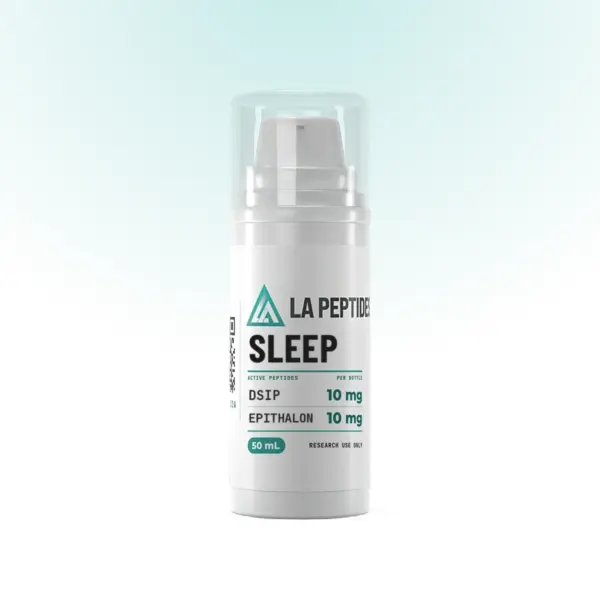
Sleep is a multi-peptide research topical containing DSIP (10 mg) and Epithalon (10 mg) per bottle.
Sleep is a multi-peptide research topical containing DSIP (10 mg) and Epithalon (10 mg) per bottle. Supplied in a 50 mL bottle. For laboratory research use only. Not for human or veterinary use.
What is Sleep?
Sleep is a multi-peptide research topical from LA Peptides, supplied as a 50 mL research formulation. It contains DSIP and Epithalon.
About the peptides
DSIP (delta sleep-inducing peptide) is a nine-amino-acid neuropeptide first isolated in 1977 from the blood of rabbits during induced sleep. It has been studied in animal models for its effects on sleep architecture, stress responses and neuroendocrine signaling.
Epithalon (Ala-Glu-Asp-Gly) is a synthetic tetrapeptide modeled on epithalamin, a peptide extract of the pineal gland. It has been studied in cell and animal models for its effects on telomerase activity, pineal function and melatonin regulation.
What is in the bottle
- DSIP: 10 mg per bottle
- Epithalon: 10 mg per bottle
- Volume: 50 mL
- Format: Research topical
Storage and handling
Keep the bottle tightly closed, away from heat and direct light. Follow the storage guidance on the label and in the certificate of analysis for this lot. Handle with standard laboratory precautions (gloves, eye protection) and keep out of reach of children.
Solo para uso en investigación
This product is sold strictly for laboratory and in-vitro research by qualified professionals. It is not a drug, cosmetic, food or supplement, has not been evaluated or approved by the FDA, and is not intended to diagnose, treat, cure or prevent any condition. Not for human or veterinary use. Nothing on this page is a claim of safety or effectiveness in humans.
En existencia
Pide antes de las 2 p. m. (hora del Pacífico) para envío el mismo díaDe lunes a viernes, salvo feriados. Te enviamos el rastreo por correo cuando sale.
- Envío gratis + agua BACUn vial de 10 mL de agua BAC gratis en pedidos de $200 o más
Solo para investigación. No apto para uso humano o veterinario, ni destinado a diagnosticar, tratar, curar o prevenir ninguna enfermedad.
Productos relacionados
 Sleep50 mL · $119.99
BPC-157 vs TB-500: comparación de dos péptidos de investigación · Cómo leer un espectro de masas en el COA de un péptido: m/z, estados de carga y aductos · Mezclas con GHK-Cu explicadas: composición de GLOW y KLOW · CJC-1295 con y sin DAC: qué significan los nombres · Biorreguladores peptídicos cortos: panorama para investigadores · Por qué puede variar el peso molecular de un péptido: sales, extremos modificados y oxidación · Timosina alfa-1: estructura, historia e investigación · Epitalon (AEDG): qué abarca la investigación · KPV: el tripéptido de la α-MSH, explicado · MOTS-c: el péptido derivado de la mitocondria, explicado · Adamax y Semax: qué se sabe sobre este análogo · Selank: el heptapéptido derivado de la tuftsina, explicado · SNAP-8 vs Argireline: comparación de dos péptidos miméticos de SNAP-25 · AHK-Cu vs GHK-Cu: comparación de dos tripéptidos de cobre · GHK-Cu: estructura, historia e investigación publicada · Pureza por HPLC: qué significa el porcentaje en un COA · Espectrometría de masas: cómo se confirma la identidad de un péptido · Cómo comparar su vial con un COA publicado · Péptidos liofilizados: qué son y cómo se almacenan en el laboratorio · Cómo elegir un proveedor de compuestos de investigación: 7 puntos