
$59.99
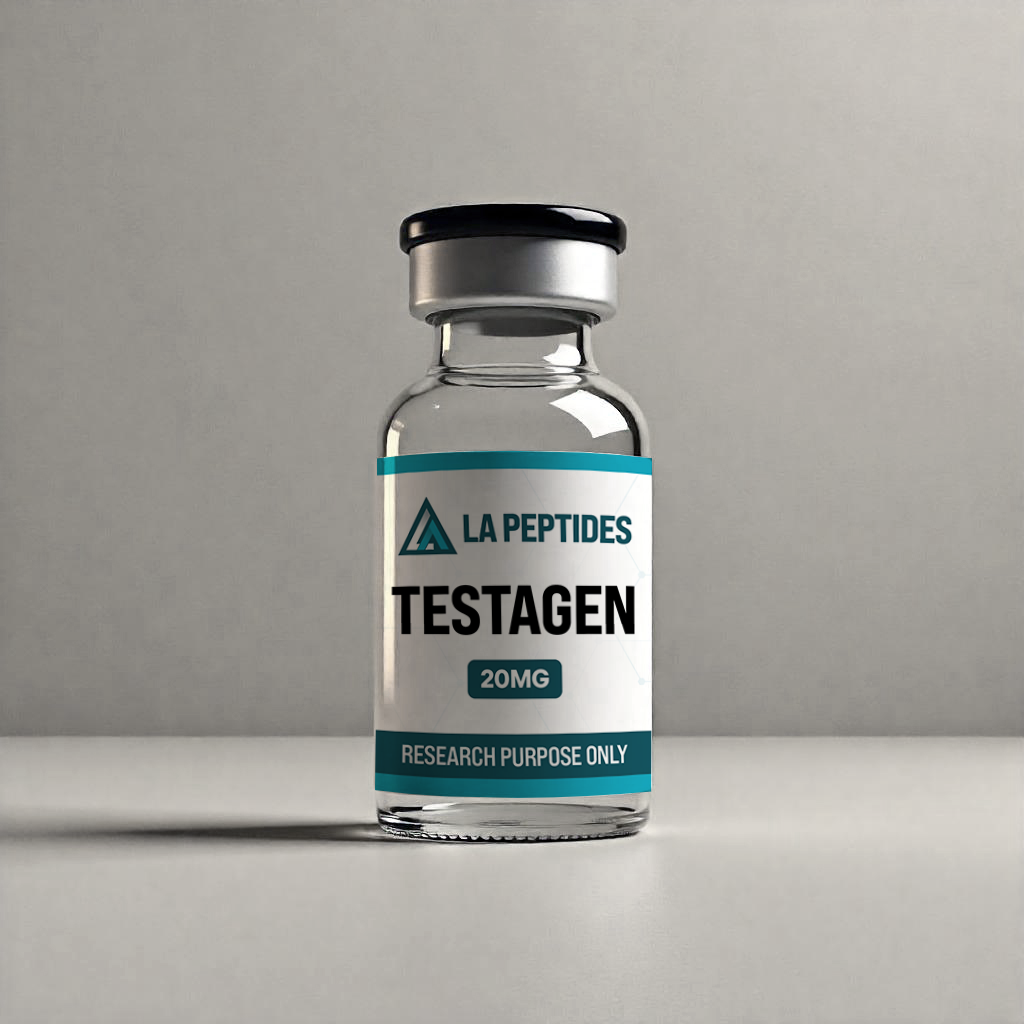
Testagen is a synthetic peptide complex composed of short amino acid sequences derived from organ-specific peptide fractions. Supplied as a 20 mg lyophilized preparation, it is intended strictly for laboratory research use. This compound is utilized in experimental models investigating gene expression, cellular signaling pathways, and peptide–DNA interactions under controlled in vitro conditions.
Testagen is classified as a low–molecular weight peptide bioregulator composed of short-chain amino acids, typically di- to tetra-peptide fragments [1]. According to PubChem, short synthetic peptides are characterized by defined amino acid sequences, peptide bonds formed via amide linkages, and predictable molecular weights depending on sequence composition [1]. These peptides are often produced through solid-phase peptide synthesis and purified using chromatographic methods to achieve research-grade purity [2].
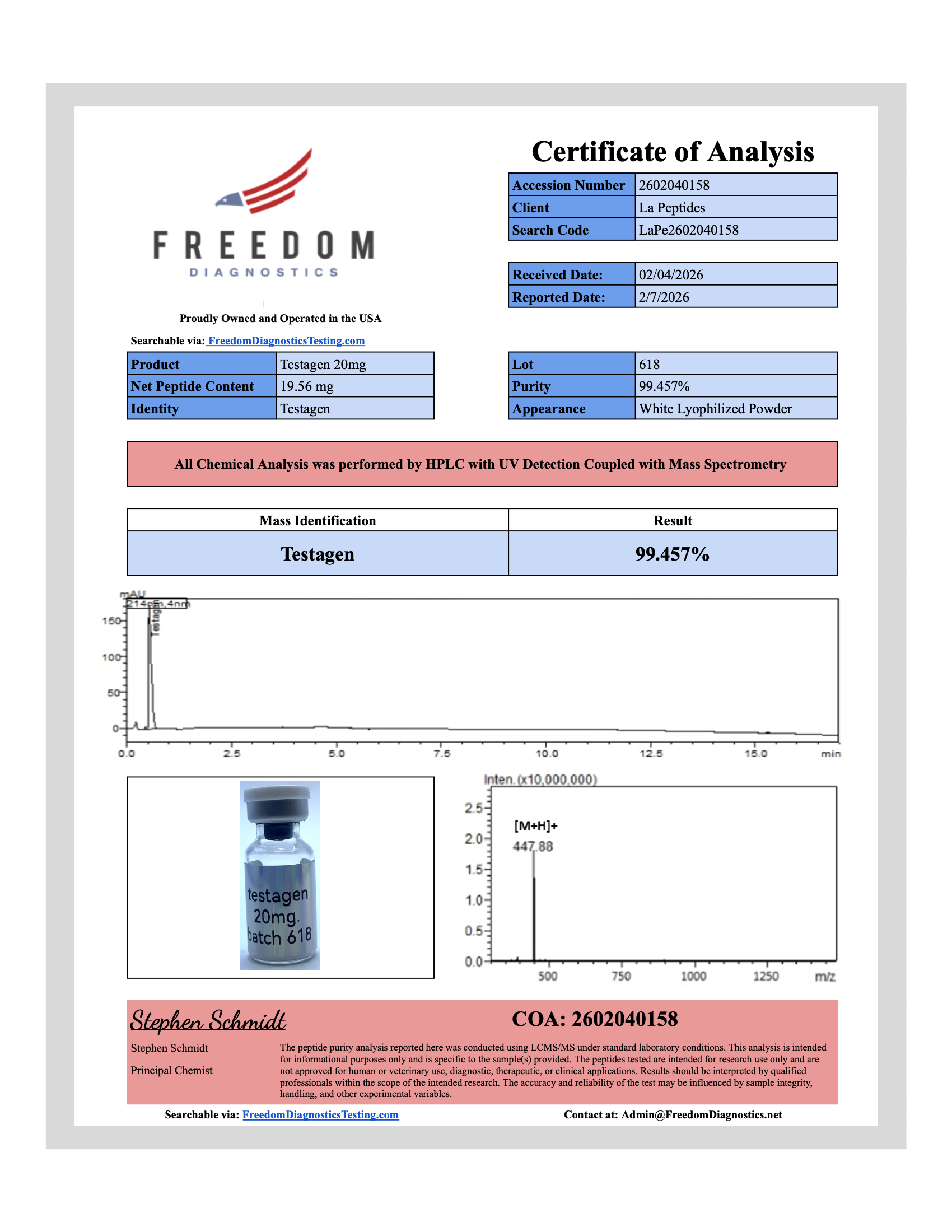
Peptide bioregulators such as Testagen are structurally distinct from large polypeptide hormones or recombinant proteins. Their small size allows for investigation of molecular interactions at the transcriptional and epigenetic levels in controlled experimental environments [3]. Structural characterization techniques commonly applied in peptide research include mass spectrometry, high-performance liquid chromatography, and nuclear magnetic resonance spectroscopy [2].
One primary area of laboratory investigation involving short peptide bioregulators is their interaction with DNA and chromatin structures. Experimental models have evaluated the capacity of low–molecular weight peptides to bind selectively to specific nucleotide sequences or influence transcriptional processes in cell cultures [3].
Studies cataloged in biomedical databases have explored how synthetic peptide fragments may modulate gene transcription in vitro through direct DNA interaction or regulation of transcription factor activity [3][4]. Research frameworks typically involve molecular docking studies, electrophoretic mobility assays, and gene expression profiling techniques such as quantitative PCR or RNA sequencing to analyze transcriptional changes [4].
In addition to transcriptional research, Testagen-type peptides are examined in cellular models assessing signal transduction pathways. Short peptides may serve as molecular probes to study receptor-mediated mechanisms, intracellular signaling cascades, and protein–protein interactions [5].
Laboratory investigations often employ cultured cell lines to observe changes in messenger RNA expression, protein synthesis, or enzymatic activity following peptide exposure [4][5]. These studies are conducted strictly under controlled experimental conditions to evaluate molecular-level responses without implying clinical or therapeutic application.
This product is meant only for research use. It is made for lab testing and in vitro experiments (outside a living body), not for use in people or animals. All information on this website is for learning purposes only. Bodily introduction of any kind into humans or animals is strictly forbidden by law. It should only be used by trained professionals in a proper lab setting. This product is not a medicine, food, or cosmetic, and must not be sold or used as one.