$1.20/mgCOA 99.84%
Single Peptides
Selank
Made in the USA3 COAs
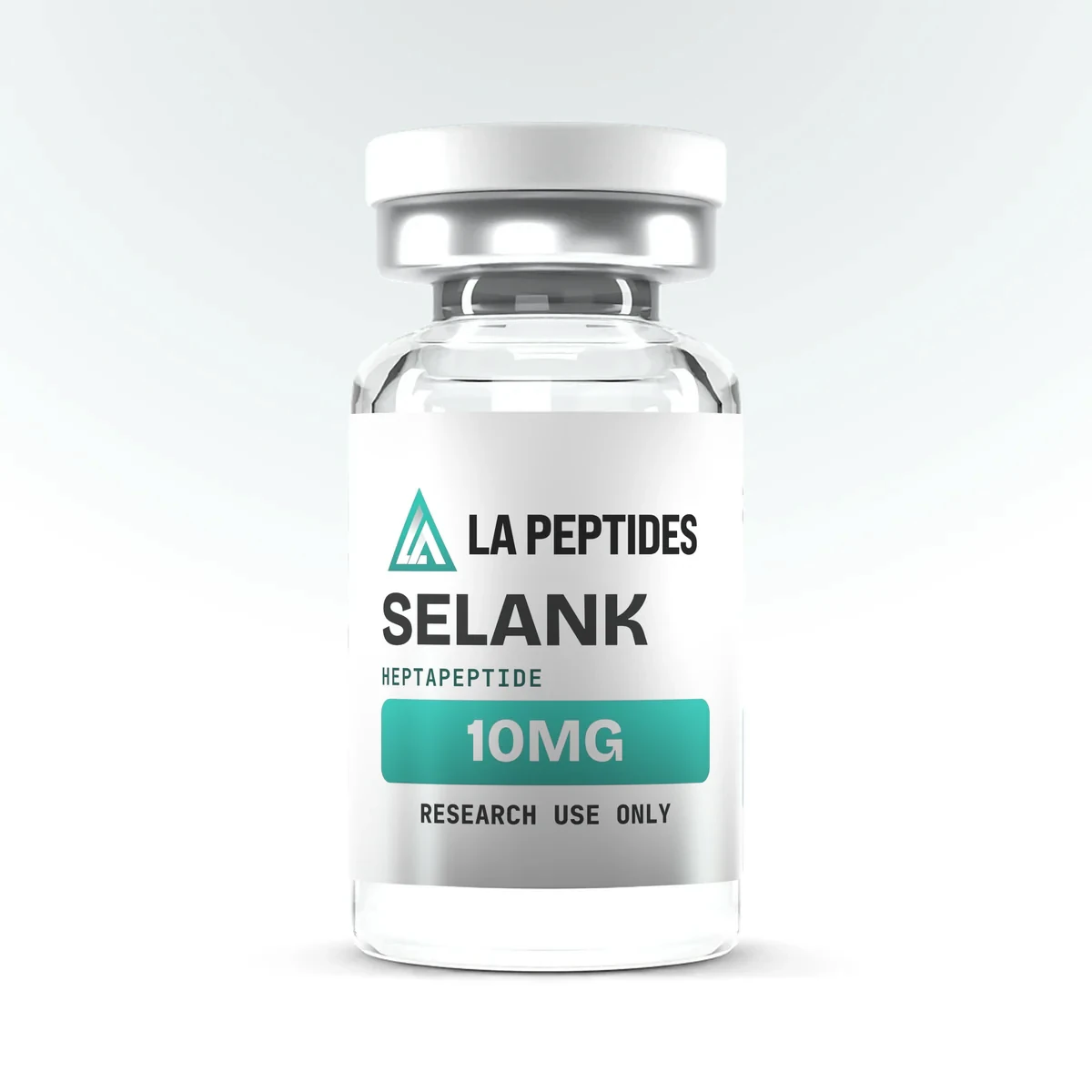
Selank is a synthetic heptapeptide (Thr-Lys-Pro-Arg-Pro-Gly-Pro) derived from tuftsin.
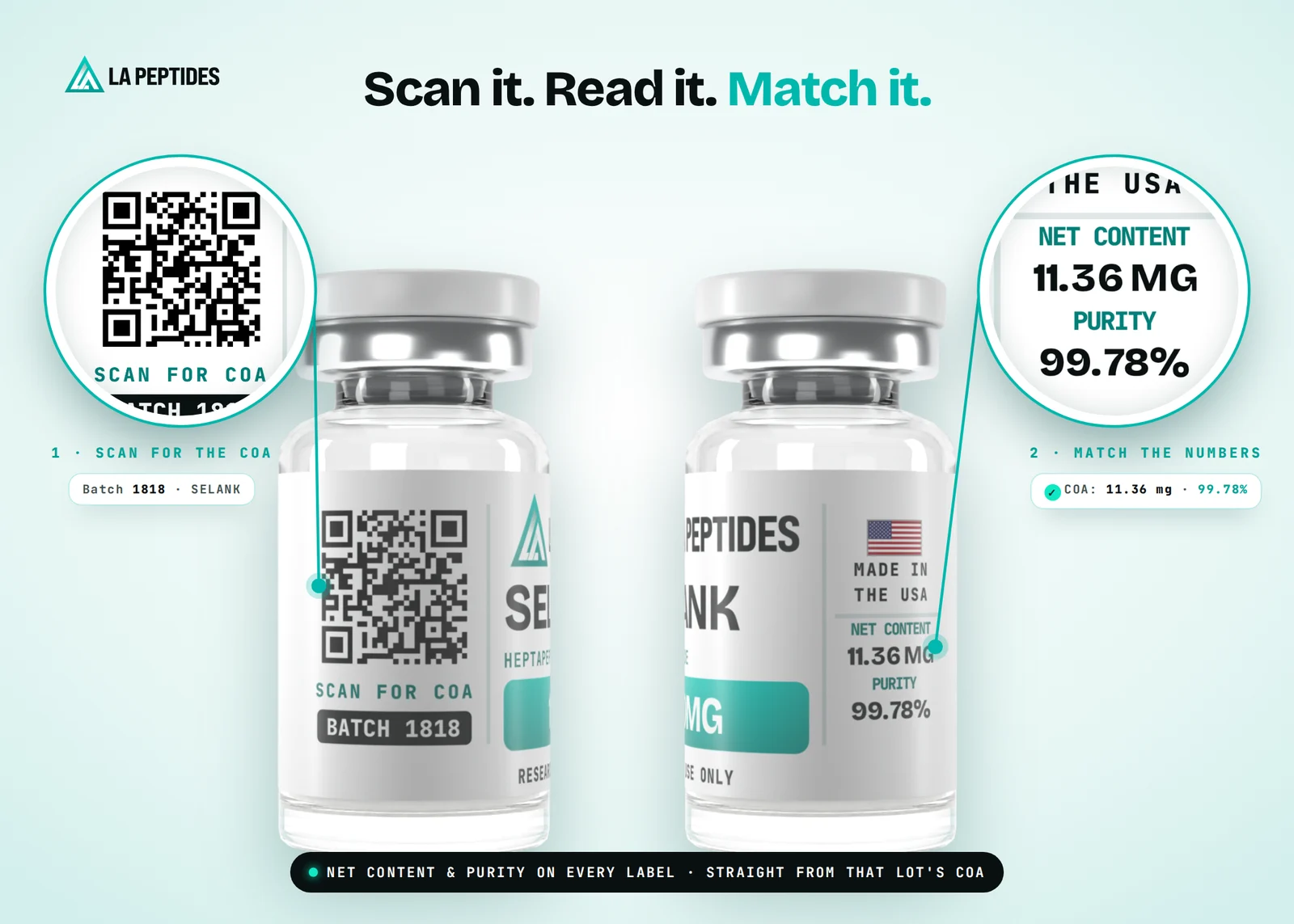
Selank is a synthetic heptapeptide (Thr-Lys-Pro-Arg-Pro-Gly-Pro) derived from tuftsin. Supplied as a lyophilized powder in sealed vials. The QR code on the label opens the latest third-party certificate of analysis (COA) for this compound. For laboratory research use only. Not for human or veterinary use.
In stock
Order by 2 PM PT for same-day dispatchMonday to Friday, except holidays. Tracking is emailed when it ships.
- Free shipping + BAC waterA free 10 mL vial of BAC water on orders of $200 or more
- QR on the back labelScan it to open the latest COA for this compound
Research use only. Not for human or veterinary use, and not intended to diagnose, treat, cure or prevent any disease.
Lab results for Selank
Each COA is issued by a third-party lab.
BioviridianHPLC purity, mass-spec identity
Third-party COA99.78%
HPLC purity on the latest COA
Batch1818
Size tested10 mg
COA issuedOct 6, 2026
Verification codeCOA9820
All 3 COAs for Selank
Research profile
Selank research profile
Selank is a synthetic heptapeptide, Thr-Lys-Pro-Arg-Pro-Gly-Pro. It was designed by extending tuftsin (Thr-Lys-Pro-Arg), a naturally occurring tetrapeptide, with a Pro-Gly-Pro sequence that is associated with greater resistance to peptidase breakdown. It was developed at the Institute of Molecular Genetics of the Russian Academy of Sciences.
Specifications
- Sequence
- Thr-Lys-Pro-Arg-Pro-Gly-Pro (TKPRPGP)
- Molecular formula
- C33H57N11O9
- Molecular weight
- ≈ 751.9 g/mol
- CAS number
- 129954-34-3
- Size
- 10MG per vial
- Form
- Lyophilized powder, sealed vial
- Storage
- Keep sealed, protected from light and moisture; follow the label
- Testing
- Third-party COAs on tested batches (HPLC purity, mass spectrometry identity). The QR code on the label opens the latest one for this compound.
Published research
- Origin: Selank is a tuftsin analog. Tuftsin is a fragment of the Fc domain of the immunoglobulin G heavy chain.
- GABAergic signaling: published rodent and in vitro studies have examined Selank as an allosteric modulator of GABA-A receptor ligand binding.
- Gene expression: several papers report changes in expression of genes involved in GABAergic neurotransmission in rodent brain tissue after Selank exposure.
- Behavioral models: Selank has been studied in rodent stress and behavioral models, often alongside reference compounds.
Frequently asked questions
What is the sequence of Selank?
Thr-Lys-Pro-Arg-Pro-Gly-Pro (TKPRPGP), a heptapeptide with a molecular weight of about 751.9 g/mol.
How is Selank related to tuftsin?
Selank contains the tuftsin sequence Thr-Lys-Pro-Arg, extended with Pro-Gly-Pro at the C-terminus.
Where do I find the certificate of analysis?
The QR code on the label opens the latest third-party certificate of analysis (COA) for this compound. You can also search the COA Portal by compound or batch number.
For laboratory research use only. Not for human or veterinary use. Not intended to diagnose, treat, cure or prevent any disease. Literature references are provided for scientific context and do not describe this product's suitability for any use.
Related compounds
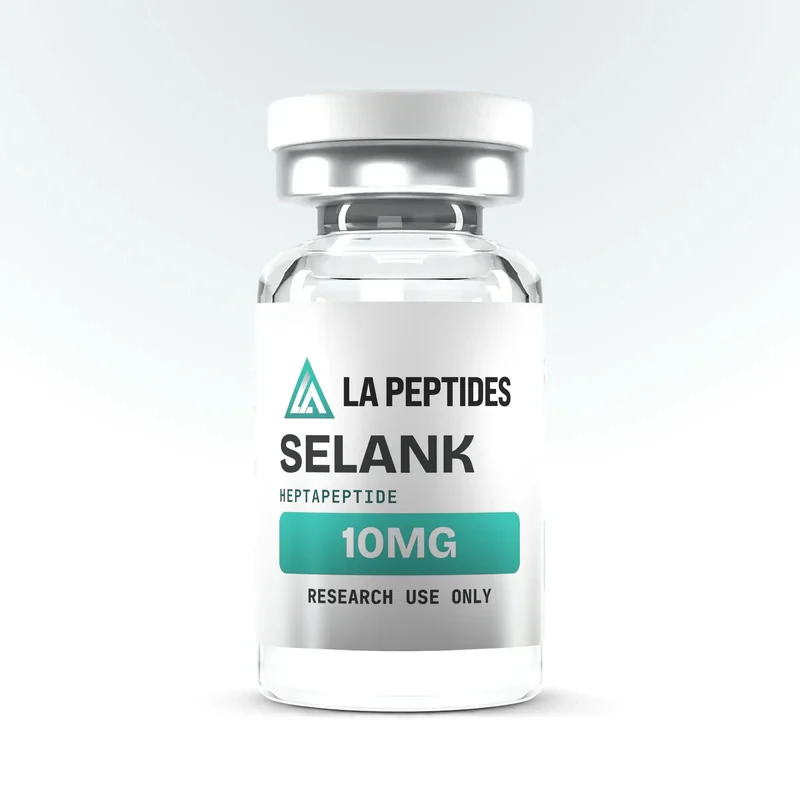 Selank10 mg · $39.99
BPC-157 vs TB-500: two research peptides compared · Reading a mass spectrum on a peptide COA: m/z, charge states and adducts · GHK-Cu blends explained: GLOW and KLOW compositions · CJC-1295 with and without DAC: what the names mean · Short peptide bioregulators: an overview for researchers · Why a peptide's molecular weight can differ: salts, caps and oxidation · Thymosin alpha-1: structure, history and research · Epitalon (AEDG): what the research covers · KPV: the α-MSH tripeptide explained · MOTS-c: the mitochondrial-derived peptide explained · Adamax and Semax: what is known about this analog · Selank: the tuftsin-derived heptapeptide explained · SNAP-8 vs Argireline: two SNAP-25 mimic peptides compared · AHK-Cu vs GHK-Cu: comparing two copper tripeptides · GHK-Cu: structure, history and published research · HPLC purity: what the percentage on a COA means · Mass spectrometry: how a peptide's identity is confirmed · How to match your vial to a published COA · Lyophilized peptides: what they are and how labs store them · How to choose a research compound supplier: 7 points