
$99.99
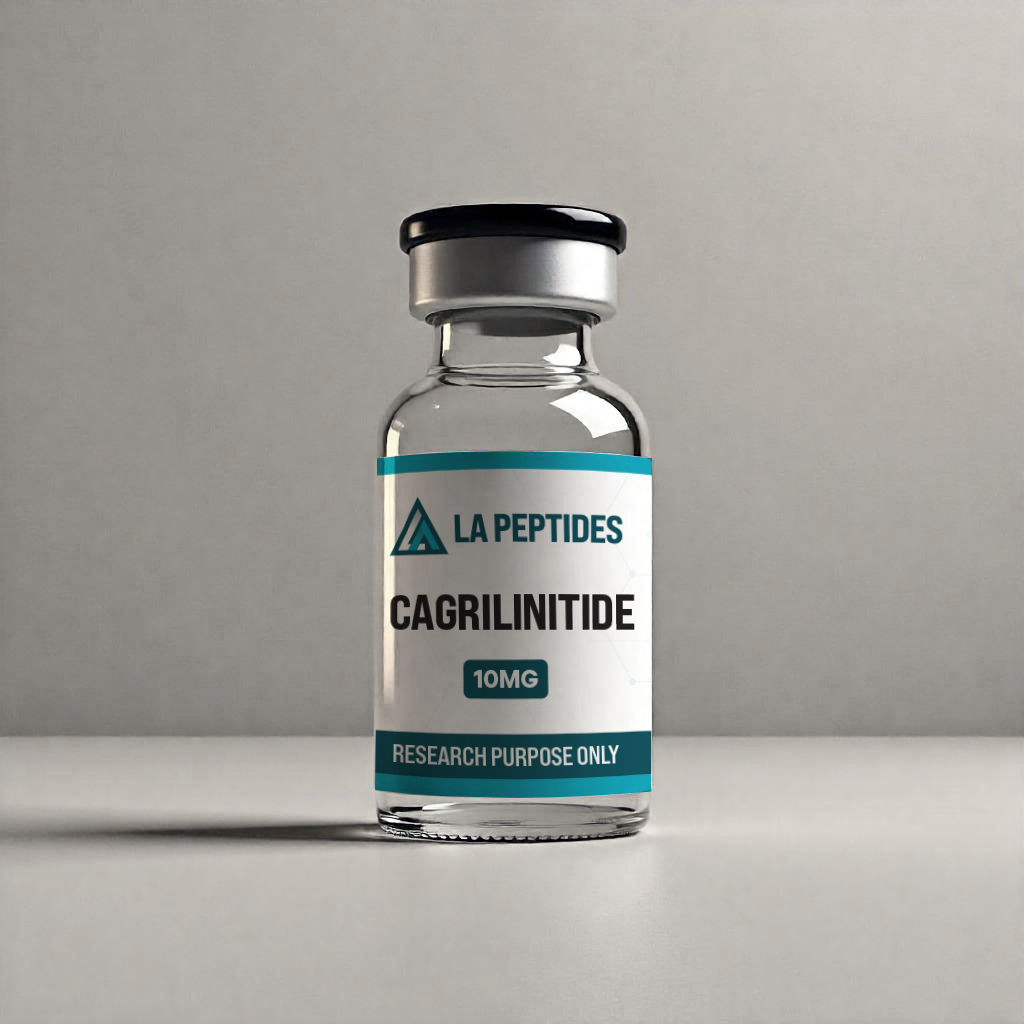
Cagrilinitide is a synthetic, long-acting peptide analogue of amylin developed for research applications. It incorporates targeted amino acid substitutions and fatty acid acylation to enhance molecular stability and receptor interaction duration. This compound is supplied exclusively for laboratory research and experimental investigation.
Product Name: Cagrilinitide
Quantity: 10mg
Research Use Only. Not for Human Consumption.
Cagrilinitide is a 37-amino-acid synthetic peptide derived from human amylin, engineered to reduce aggregation and improve physicochemical stability. The molecule is modified through C20 fatty diacid acylation, which increases albumin binding and prolongs systemic exposure in experimental models. It has a molecular formula of C₁₉₄H₃₁₂N₅₄O₅₉S₂ and an approximate molecular weight of 4409 Da. Based on its structure and modifications, Cagrilinitide is classified as a long-acting amylin analogue within the calcitonin peptide family, making it suitable for mechanistic studies of peptide hormone signaling. [1]
Cagrilinitide acts as a non-selective agonist at amylin receptors formed by the calcitonin receptor (CTR) in combination with receptor activity-modifying proteins (RAMPs). These receptors are G protein-coupled receptors involved in intracellular signaling pathways such as cyclic AMP production. Experimental studies demonstrate that cagrilinitide engages multiple amylin receptor subtypes, allowing researchers to investigate receptor activation profiles, ligand bias, and signaling persistence. Its extended receptor engagement makes it a useful tool for studying long-acting peptide-receptor interactions in controlled research settings. [2]
Preclinical research uses cagrilinitide to explore amylin-related signaling pathways involved in metabolic regulation and central nervous system activity. Animal and in vitro studies have examined its effects on neuronal populations within appetite-associated brain regions, contributing to broader understanding of amylin receptor distribution and function. These investigations focus on receptor-mediated signaling mechanisms rather than physiological outcomes, providing insight into peptide-driven neural and metabolic pathways under experimental conditions.[3]
Cagrilinitide is frequently included in comparative studies alongside other amylin analogues and peptide receptor agonists to evaluate structure-activity relationships. Research protocols often assess differences in receptor affinity, signaling duration, and molecular stability resulting from peptide modification strategies. Such studies support the characterization of peptide design principles and receptor selectivity within the calcitonin peptide family, informing future experimental compound development. [4]
This product is meant only for research use. It is made for lab testing and in vitro experiments (outside a living body), not for use in people or animals. All information on this website is for learning purposes only. Bodily introduction of any kind into humans or animals is strictly forbidden by law. It should only be used by trained professionals in a proper lab setting. This product is not a medicine, food, or cosmetic, and must not be sold or used as one.